Accountability Systems That Actually Work
Discover practical accountability systems that actually work for freelancers, marketers, and entrepreneurs seeking sustainable growth and discipline.
5/7/20265 min read
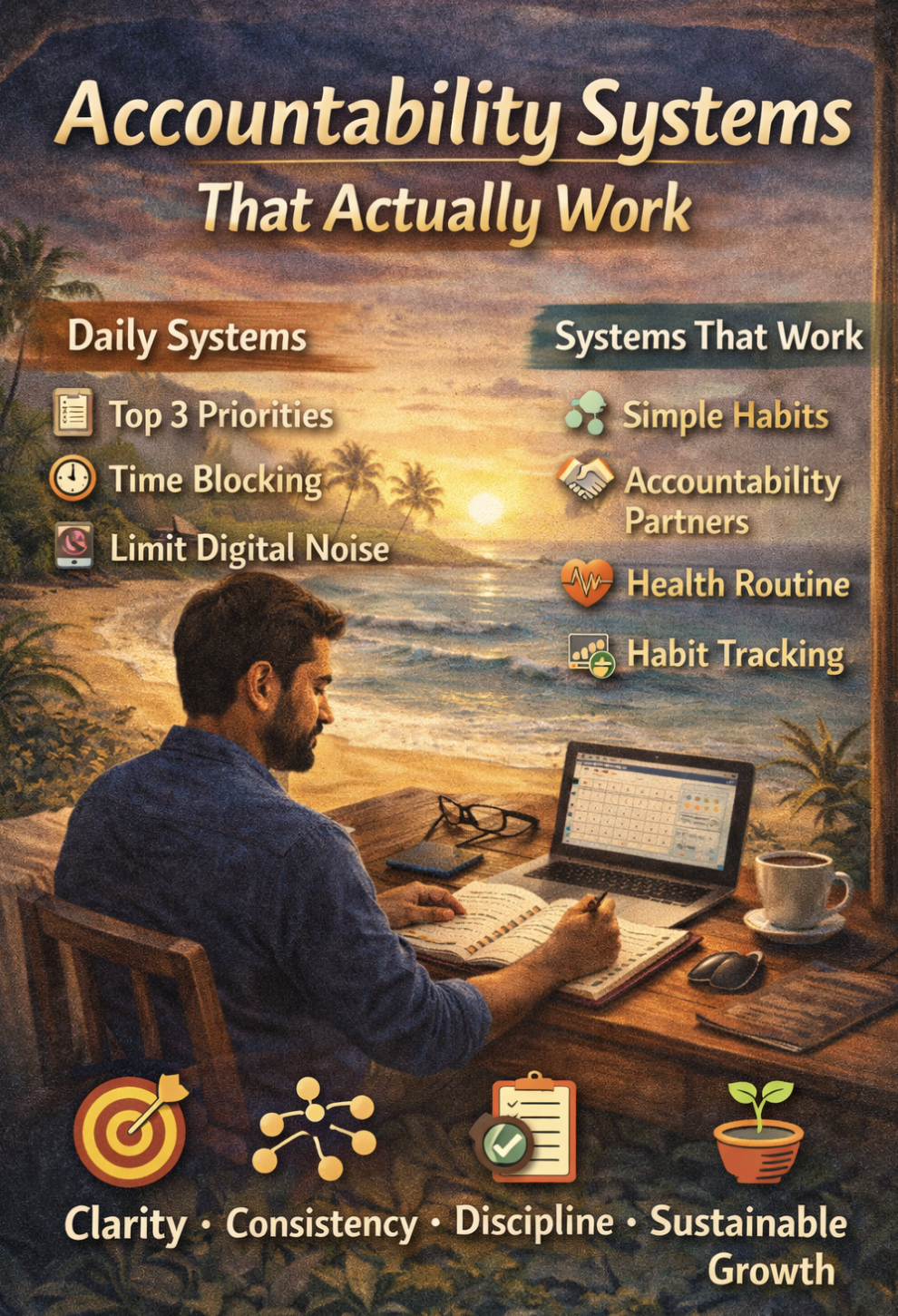
Accountability Systems That Actually Work
For many years, I believed motivation was enough.
Whenever I felt inspired, I worked hard.
Whenever motivation disappeared, productivity dropped.
And honestly, this cycle is very common among freelancers, marketers, and entrepreneurs in India.
One week you feel unstoppable.
The next week even small tasks feel difficult.
Over time, I realised something important:
Successful people are not always more motivated.
They are usually more accountable.
That mindset changed how I approached SEO, freelancing, health, business, and even personal life.
As someone who has spent over 12 years in digital marketing and hotel marketing, I’ve learned that accountability systems matter far more than temporary motivation.
Especially in freelancing, nobody is constantly monitoring you.
No manager checks whether you woke up early.
No boss reminds you to improve your skills.
No company forces you to maintain work-life balance.
Everything depends on your systems.
Growing up in coastal Karnataka around Byndoor and Kundapura taught me something valuable about consistency. Fishermen go to work even when conditions are imperfect. Farmers follow routines regardless of mood. Families build discipline naturally through daily habits.
That consistency quietly shapes strong lives.
Today, many people are overwhelmed because they rely too heavily on emotions and too little on systems.
In this article, I want to share accountability systems that actually work — not theoretical productivity hacks, but practical systems that helped me stay disciplined, balanced, and mentally healthier while managing freelance work, SEO projects, clients, and life responsibilities.
[Image Suggestion: Freelancer writing goals and daily habits in a notebook near a coastal Karnataka balcony]
Why Accountability Matters More Than Motivation
Motivation feels powerful, but it is unreliable.
Some mornings you feel energetic.
Some days you feel mentally drained.
That’s normal.
The problem begins when your entire life depends on emotional mood.
Accountability Creates Stability
Accountability systems help you continue even when motivation disappears.
That is the real difference.
What Accountability Actually Means
Many people misunderstand accountability.
It is not punishment.
It simply means creating structures that help you stay aligned with your goals and values.
Why Freelancers Struggle Without Accountability
Freelancers and remote workers especially face challenges like:
Irregular schedules
Procrastination
Screen distractions
Burnout
Inconsistent productivity
Emotional overwhelm
I personally experienced this during my early years in SEO consulting.
Because digital marketing work never truly “ends.”
There is always:
Another email
Another ranking fluctuation
Another analytics report
Another client revision
Without structure, work can slowly consume your mental peace.
Research Supports Structured Habits
According to research published in the European Journal of Social Psychology, habit consistency plays a major role in long-term behavioural change.
In simple words:
Small repeated actions matter more than occasional bursts of motivation.
The Best Accountability Systems Are Simple
One major mistake people make is creating overly complicated systems.
Fancy planners.
Too many apps.
Aggressive routines.
Eventually they become mentally exhausting.
Simple Systems Are Easier to Sustain
The best accountability systems usually feel realistic and repeatable.
Personally, I prefer systems that reduce mental friction.
My Core Accountability Principles
Over time, I started focusing on:
Simplicity
Consistency
Sustainability
Mental clarity
Realistic expectations
These principles changed my work quality significantly.
Why Simplicity Works Better
When systems become too complicated:
You avoid them
You feel guilty
You become inconsistent
But simple routines become automatic over time.
Coastal Karnataka and Natural Discipline
Growing up in coastal Karnataka, daily life naturally followed rhythms.
Morning routines.
Meal timings.
Temple visits.
Family routines.
Outdoor work schedules.
Life had structure without constant stress.
Modern digital life often lacks that grounding rhythm.
And honestly, many professionals suffer because of it.
[Image Suggestion: Minimal desk setup with notebook, tea, laptop, and calm greenery outside]
Daily Accountability Systems That Changed My Life
The biggest improvements in my productivity came from small daily systems.
Not dramatic life changes.
1. Writing Down Daily Priorities
Every morning, I write down:
3 important work tasks
1 personal goal
1 health-related task
This simple habit reduces mental clutter immediately.
Why This Works
When priorities remain unclear, the brain becomes overwhelmed.
Writing tasks down creates direction.
2. Time Blocking
Earlier, I constantly multitasked.
Emails.
WhatsApp.
SEO dashboards.
Social media.
Client calls.
It destroyed concentration.
Now I use focused work blocks.
Example
Morning: Deep SEO work
Afternoon: Client communication
Evening: Learning or planning
This improved both productivity and stress levels.
3. End-of-Day Reflection
At night, I ask myself:
What went well today?
What distracted me?
What can improve tomorrow?
This creates self-awareness without harsh self-criticism.
4. Limiting Digital Noise
Too many notifications quietly destroy focus.
I reduced:
Unnecessary alerts
Random scrolling
Constant app switching
This improved mental clarity enormously.
[Image Suggestion: Freelancer peacefully reviewing daily goals during sunset]
Accountability Partners and Community Support
One surprising lesson I learned:
Self-discipline becomes easier when supportive people surround you.
Family Creates Emotional Accountability
Indian families naturally create grounding routines.
Simple things like:
Eating together
Morning conversations
Evening tea
Checking on each other
…can improve emotional stability greatly.
Why Isolation Is Dangerous for Freelancers
Many freelancers work alone for long hours.
This increases risks of:
Burnout
Overthinking
Anxiety
Emotional exhaustion
According to studies published in occupational health journals, social support plays an important role in reducing workplace stress.
Accountability Partners Can Help
You do not need a large mastermind group.
Even one trusted person helps.
For example:
Weekly check-ins with a friend
Monthly business discussions
Shared health goals
Skill accountability groups
The Right Accountability Feels Supportive
Healthy accountability encourages progress.
Toxic accountability creates shame and pressure.
That distinction matters greatly.
Health Accountability Is Just as Important
One thing I regret from my earlier career years is ignoring health for too long.
Like many digital professionals, I believed productivity mattered more than recovery.
That mindset eventually leads to burnout.
Your Body Is Your Productivity System
Freelancers often forget this.
Poor sleep.
Poor posture.
Poor hydration.
No movement.
All these affect:
Creativity
Focus
Emotional balance
Decision-making
What Helped Me Personally
Morning Walks
Coastal Karnataka mornings have a peaceful energy that clears the mind beautifully.
Morning walks became one of my strongest accountability systems.
Hydration and Heat Awareness
People from humid regions understand how quickly heat drains energy.
According to IMD climate observations, coastal Karnataka experiences high humidity during much of the year.
Simple hydration habits genuinely affect concentration and mood.
Sleep Accountability
Sleep changed my productivity more than any app ever did.
According to the Sleep Foundation, adults generally need 7–9 hours of sleep for optimal cognitive performance.
Now I protect sleep more seriously.
And honestly, my work quality improved naturally.
[Image Suggestion: Early morning walk near beach or greenery in Karnataka]
Why Most Accountability Systems Fail
This is important.
Most systems fail not because people are lazy.
They fail because the systems themselves are unrealistic.
Common Mistakes
1. Trying to Change Everything Overnight
Extreme routines rarely last.
Small improvements are more sustainable.
2. Depending Only on Motivation
Motivation fluctuates constantly.
Systems should work even on low-energy days.
3. Ignoring Emotional Health
Stress affects discipline heavily.
When people feel emotionally overwhelmed, productivity naturally drops.
4. Comparing Yourself Constantly Online
Social media creates unrealistic expectations.
Many people feel “behind” because they compare their ordinary days to someone else’s highlight reel.
5. Creating Punishment-Based Systems
Guilt is not sustainable motivation.
Self-respect works better than self-hate.
Accountability Should Support Life — Not Control It
This is very important.
The goal is not robotic productivity.
The goal is building a healthier, more intentional life.
Practical Accountability Systems for Freelancers and Marketers
Here are a few practical systems that genuinely help.
Daily Systems
Write top 3 priorities
Schedule focused work blocks
Track screen time
Drink enough water
Take outdoor breaks
Weekly Systems
Review completed work
Track finances
Plan learning goals
Reflect on stress levels
Monthly Systems
Review business growth
Audit habits
Evaluate work-life balance
Update portfolio or skills
Accountability Tools That Help
You do not need expensive productivity systems.
Simple tools work well:
Notebook or journal
Google Calendar
Task lists
Habit tracker
Weekly reflection sheets
The “Minimum Standard” System
This personally helped me greatly.
Instead of chasing perfection daily, I focus on minimum consistency.
For example:
At least 30 minutes of learning
At least one focused work session
At least some movement daily
This prevents the all-or-nothing mindset.
[Image Suggestion: Simple habit tracker notebook beside laptop and coffee]
Discipline Feels Better Than Constant Chaos
One thing I’ve realised over the years:
Discipline actually reduces stress.
Many people think discipline feels restrictive.
But lack of structure creates far more anxiety.
Structured Living Creates Mental Peace
When routines improve:
Decision fatigue reduces
Stress becomes manageable
Confidence increases
Productivity feels calmer
The Emotional Benefits of Accountability
Healthy accountability improves:
Self-respect
Confidence
Emotional stability
Long-term consistency
Sustainable Growth Matters Most
Today, many people are chasing fast success while quietly sacrificing:
Health
Relationships
Sleep
Peace of mind
But sustainable success always lasts longer.
What I Continue Learning
Even now, I am still improving.
Some weeks are productive.
Some feel difficult.
But accountability systems help me return to balance faster instead of feeling completely lost.
And honestly, that matters a lot.
Anudeep Hegde
Seasoned Internet Marketing Specialist and Hotel Marketing Expert with over 12+ years of experience helping brands grow and succeed online.
Get in touch
connect@anudeephegde.com
+91 9449507266, +91 9731258717
© 2026. All rights reserved. @Trip Nirvigna Marketing