Building Confidence as a Consultant
Learn how to build confidence as a consultant through experience, communication, continuous learning, and trust. Practical insights from 12+ years in digital marketing.
Anudeep Hegde
6/26/20266 min read
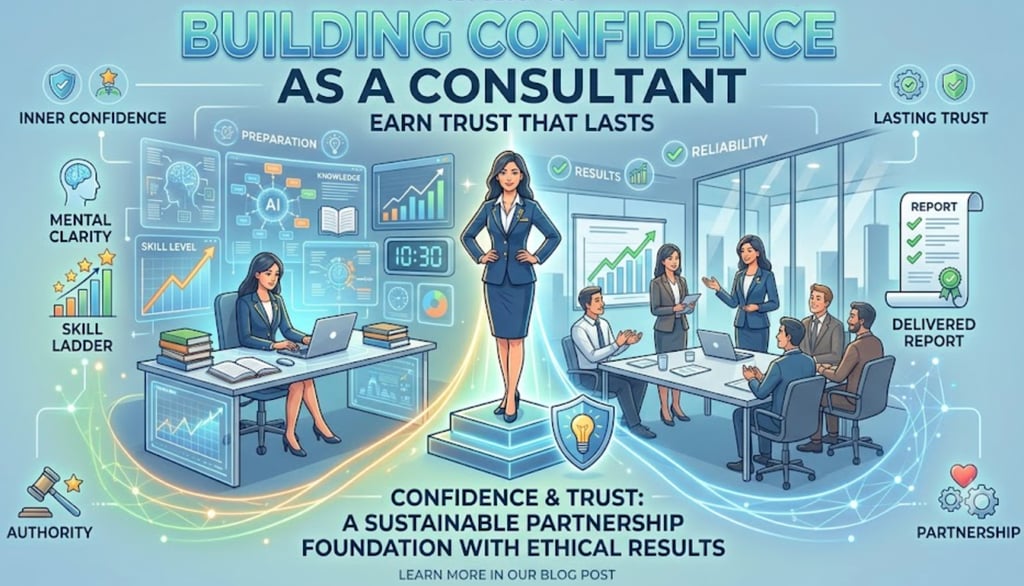

Building Confidence as a Consultant: Earn Trust That Lasts
When people think about confidence, they often imagine someone who speaks loudly, has all the answers, and never hesitates.
My experience has taught me something very different.
Over the last 12+ years working in internet marketing and hotel marketing, I've met consultants who could speak brilliantly but struggled to deliver results. I've also met quiet professionals who transformed businesses simply because clients trusted them.
Building confidence as a consultant isn't about pretending to know everything. It's about becoming someone people can rely on.
Growing up in Coastal Karnataka, especially around Byndoor, I learned an important lesson from observing local business owners. Whether it was a hotel owner, a farmer, or a shopkeeper, people earned respect through consistency—not flashy promises.
That lesson has stayed with me throughout my professional journey.
Whether you're starting your consulting career or have been working independently for years, confidence is something you build, not something you're born with.
In this article, I'll share practical lessons that have helped me become a more confident consultant while staying authentic to who I am.
By the end, you'll understand how confidence grows through preparation, experience, communication, and genuine care for your clients.
Why Building Confidence as a Consultant Matters
Consulting is different from selling products.
People aren't buying software, advertisements, or marketing campaigns.
They're buying your expertise, your judgment, and your ability to solve problems.
When clients hire a consultant, they're placing trust in another person.
That means confidence directly influences:
Client trust
Better communication
Stronger relationships
Higher-value projects
Long-term referrals
Professional reputation
One thing I've noticed throughout my career is this:
Clients don't expect perfection. They expect clarity, honesty, and consistency.
That's where genuine confidence begins.
Confidence Comes From Preparation, Not Personality
Many people assume confidence is a personality trait.
I disagree.
Some of the best consultants I've worked with are naturally introverted.
What makes them confident?
Preparation.
Before every client meeting, I try to understand:
Their business
Their industry
Their competitors
Their challenges
Their goals
When you prepare properly, uncertainty reduces naturally.
Build a Preparation Checklist
Before every consultation, ask yourself:
What problem is the client trying to solve?
What questions might they ask?
What data should I review?
What recommendations can I realistically provide?
What don't I know yet?
Notice the last question.
Confident consultants aren't afraid to admit they don't know something.
They simply say,
"That's a great question. Let me verify the latest information and get back to you."
Clients appreciate honesty far more than guesswork.
Image Suggestion: A consultant preparing notes before a client meeting with a laptop, notebook, and coffee.
Experience Builds Confidence—One Project at a Time
Looking back, I smile when I remember my first client presentations.
I rehearsed every sentence.
I worried about every question.
I second-guessed almost every recommendation.
Today, those meetings feel much more natural.
Not because I became fearless.
Because experience replaced uncertainty.
Every project teaches something:
Better communication
Better planning
Better listening
Better problem-solving
Better decision-making
Don't Wait Until You Feel Ready
One mistake many aspiring consultants make is waiting for confidence before taking action.
The reality is the opposite.
Action creates confidence.
Start with:
Small businesses
Friends' businesses
Local entrepreneurs
Personal projects
Volunteer consulting
Each success becomes evidence that you can solve real problems.
Learn to Listen More Than You Speak
One of the biggest turning points in my consulting journey was realizing that clients don't always need immediate answers.
Sometimes they simply need someone who listens carefully.
When clients feel heard:
They trust you faster.
They share better information.
They become more open to recommendations.
I've found that asking thoughtful questions often creates more value than delivering long presentations.
Questions That Build Better Conversations
Instead of immediately offering solutions, ask:
What are your biggest challenges today?
What has already been tried?
What would success look like?
What concerns you most?
If we solve one issue first, which one matters most?
These conversations build confidence for both the client and the consultant.
Image Suggestion: Consultant actively listening to a client during a business discussion.
Keep Learning Without Feeling Left Behind
Digital marketing changes quickly.
Search engines evolve.
Advertising platforms change.
Consumer behaviour shifts.
Artificial intelligence continues transforming how businesses operate.
Instead of trying to know everything, I've accepted one simple truth:
Learning is part of the job.
According to the World Economic Forum's Future of Jobs Report 2025, continuous learning and adaptability remain among the most valuable skills across industries as technology evolves.
That reinforces something every consultant should remember:
Learning isn't optional anymore.
It's a competitive advantage.
Build a Weekly Learning Habit
You don't need hours every day.
Even 30–45 minutes several times a week can make a significant difference.
Focus on:
Industry blogs
Search engine updates
Marketing case studies
Podcasts
Books
Client experiences
The more you learn, the calmer you become during conversations.
Confidence grows naturally when knowledge compounds over time.
Build Confidence Through Small Daily Habits
Confidence rarely comes from one breakthrough moment.
It's built through small, repeatable habits.
Here are habits that have helped me over the years.
1. Write Every Day
Writing improves clarity.
Whether it's blog posts, LinkedIn articles, or notes, writing forces you to organize your thinking.
2. Review Past Successes
Keep a folder of:
Client testimonials
Successful campaigns
Positive feedback
Milestones
Whenever self-doubt appears, revisit that folder.
It reminds you how far you've come.
3. Improve Communication
Practice explaining complex ideas in simple language.
Clients appreciate clarity much more than technical jargon.
4. Stay Healthy
Living in Coastal Karnataka reminds me daily that productivity depends on health.
The humidity, warm weather, and busy work schedules make it easy to neglect ourselves.
I've learned that confidence feels very different when you're:
Well rested
Properly hydrated
Exercising regularly
Spending time outdoors
A healthy body supports a confident mind.
5. Protect Family Time
One lesson I've learned over the years is that professional success means very little if personal relationships suffer.
Spending time with family helps maintain perspective.
It reduces stress and reminds us why we work in the first place.
Image Suggestion: Early morning walk along a Coastal Karnataka beach with sunrise, symbolising clarity and confidence.
Stop Comparing Your Beginning to Someone Else's Middle
Social media makes consulting look effortless.
You see:
Luxury offices
Big client announcements
Speaking events
Awards
Success stories
What you rarely see are:
Failed proposals
Rejected pitches
Difficult clients
Sleepless nights
Years of learning
Everyone's journey is different.
Instead of comparing yourself with others, compare yourself with who you were six months ago.
That comparison is far more meaningful.
Confidence Grows Faster When You Focus on Helping
One mindset shift changed everything for me.
Instead of asking,
"How do I impress this client?"
I started asking,
"How can I genuinely help this business?"
That single change removed enormous pressure.
Consulting became less about proving myself and more about solving problems.
Ironically, clients noticed the difference.
They became more relaxed.
Conversations became more honest.
Relationships became longer.
The best consultants aren't trying to appear smart.
They're trying to be useful.
Practical Ways to Build Confidence Starting Today
Here's a simple action plan you can begin immediately.
HabitWhy It MattersPrepare before every meetingReduces uncertaintyListen carefullyBuilds trustKeep learning weeklyImproves expertiseDocument client winsStrengthens self-beliefAsk better questionsCreates better solutionsAdmit when you don't knowBuilds credibilityPrioritize healthSupports mental clarityFocus on helpingReduces anxiety
You don't need dramatic changes.
Small improvements every week eventually transform how you feel and how clients perceive you.
Confidence and Authenticity Go Together
One thing I appreciate about growing up in Coastal Karnataka is the value placed on sincerity.
People can usually tell when someone is pretending.
The same applies in consulting.
You don't need to imitate another expert.
You don't need an artificial personality.
You don't need complicated vocabulary.
Clients remember people who are:
Honest
Reliable
Respectful
Knowledgeable
Consistent
Authenticity creates confidence that lasts.
And confidence built on authenticity never feels forced.
Conclusion
Building confidence as a consultant isn't about eliminating fear.
It's about gaining enough experience, knowledge, and perspective that fear no longer controls your decisions.
Every conversation teaches something.
Every project makes you better.
Every challenge strengthens your judgment.
Looking back at my own journey—from Coastal Karnataka to working with businesses across industries—I realise confidence wasn't something I found one day.
It grew quietly through preparation, continuous learning, honest conversations, and genuine care for clients.
If you're just starting your consulting journey, remember this:
You don't have to know everything. You simply need to keep learning, keep helping, and keep showing up consistently.
Over time, confidence becomes less about believing in yourself—and more about knowing you've earned that belief.
FAQs
1. What is the fastest way to build confidence as a consultant?
Preparation, continuous learning, and gaining practical experience through real projects are the fastest ways to develop genuine confidence.
2. Can introverts become successful consultants?
Absolutely. Many successful consultants are excellent listeners, thoughtful communicators, and strong problem-solvers rather than outspoken personalities.
3. How do I handle questions I don't know the answer to?
Be honest. Tell the client you'll verify the information and follow up promptly. Transparency builds more trust than guessing.
4. Does confidence improve with experience?
Yes. Every project teaches communication, problem-solving, and decision-making skills that naturally increase confidence over time.
5. How important is communication for consultants?
It's essential. Clear communication helps clients understand your recommendations and builds stronger professional relationships.
6. Should new consultants charge lower fees to gain confidence?
It's reasonable to start competitively, but your pricing should reflect the value you deliver. Confidence grows through results, not just pricing.
7. How does personal well-being affect consulting confidence?
Good health, sufficient sleep, exercise, and quality family time improve focus, decision-making, and resilience, all of which contribute to professional confidence.
8. Can confidence be learned?
Yes. Confidence is a skill developed through preparation, experience, reflection, and continuous improvement rather than an inborn personality trait.
.
Click here to know about Resilience Lessons from Failed Campaigns
Anudeep Hegde
Seasoned Internet Marketing Specialist and Hotel Marketing Expert with over 12+ years of experience helping brands grow and succeed online.
Get in touch
connect@anudeephegde.com
+91 9449507266, +91 9731258717
© 2026. All rights reserved. @Trip Nirvigna Marketing