Building Habits That Stick Through Marketing Lessons
Learn practical lessons on building habits that stick using real insights from marketing campaigns, productivity, consistency, and life balance.
anudeep hegde
5/15/20266 min read
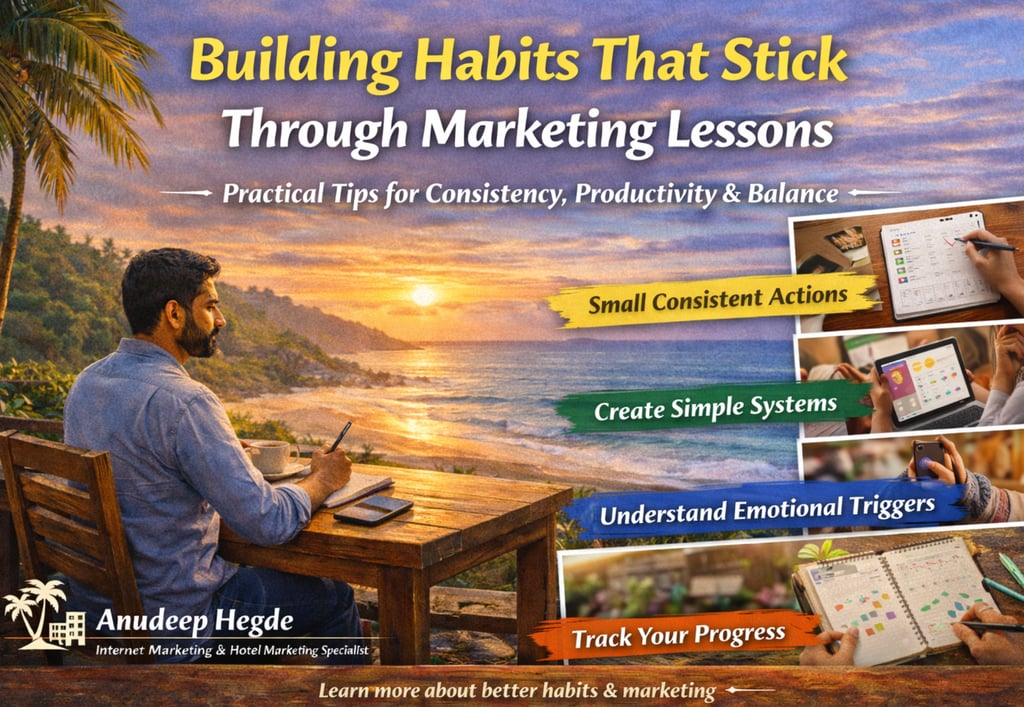
Building Habits That Stick Through Marketing Lessons
One thing digital marketing taught me over the years is this:
Consistency beats intensity almost every time.
I’ve seen businesses spend huge amounts on one big campaign and disappear within months. At the same time, I’ve watched smaller brands quietly grow year after year simply because they stayed consistent.
Interestingly, the same pattern applies to personal habits too.
Whether it’s:
Fitness
Productivity
Learning
Health
Family routines
Financial discipline
Content creation
…the habits that truly change our lives are usually the simple ones we repeat consistently.
After working in digital marketing and hotel marketing for more than 12 years, I realised campaign management and personal growth have surprising similarities. Both require:
Patience
Systems
Emotional balance
Long-term thinking
Small daily actions
Growing up in coastal Karnataka also shaped this mindset naturally for me.
Life here moves differently compared to big-city hustle culture. Farmers understand seasons. Fishermen respect timing. Coconut trees grow steadily over years. Families build traditions slowly across generations.
Nature quietly teaches one important lesson:
Sustainable growth takes repetition.
In this article, I want to share practical lessons about building habits that stick — not from self-help theory alone, but from real experiences running marketing campaigns, managing businesses, observing human behaviour, and learning through failures over time.
If you’ve struggled with consistency, motivation, or maintaining routines, these insights may help you approach habits more realistically and sustainably.
[Image Suggestion: Calm entrepreneur journaling near a coastal Karnataka sunrise]
Why Most Habits Fail Quickly
Many people begin new habits with excitement.
New year resolutions.
New routines.
Big productivity goals.
Extreme schedules.
But within a few weeks, motivation fades.
Honestly, I’ve experienced this personally too.
The Problem Is Often Unrealistic Intensity
People try to change everything at once:
Wake up at 5 AM
Exercise daily
Eat perfectly
Work harder
Read books
Quit distractions
The brain becomes overloaded.
Marketing Campaigns Taught Me This Lesson Early
In digital marketing, aggressive campaigns sometimes create temporary spikes but fail long-term because systems are weak underneath.
Habits work similarly.
Sudden intensity creates emotional excitement.
But sustainable routines require repeatability.
Small Consistent Actions Win
According to research published in the European Journal of Social Psychology, habit formation can take varying lengths of time depending on behaviour consistency and complexity.
This explains why sustainable habits grow gradually rather than instantly.
Motivation Is Temporary. Systems Matter More.
One thing I strongly believe today:
Good habits should feel sustainable, not exhausting.
That mindset changed how I approach productivity and life completely.
Consistency Matters More Than Perfection
One of the biggest mistakes people make while building habits is expecting perfection.
Miss one workout?
They quit.
Skip one productive day?
They feel guilty.
Post inconsistent content?
They lose momentum.
Campaign Optimisation Taught Me Patience
In marketing campaigns, results rarely improve overnight.
Good campaigns require:
Testing
Adjustments
Learning
Consistent monitoring
Similarly, personal habits improve gradually.
Progress Is Often Invisible Initially
This is important.
When you:
Walk daily
Write consistently
Improve sleep
Learn regularly
…the results may not feel dramatic immediately.
But small improvements compound over time.
Coastal Karnataka Quietly Reflects This Philosophy
Growing up around Byndoor and Kundapura, I noticed nature never rushes.
Monsoon arrives gradually.
Trees grow steadily.
Rivers flow patiently.
Modern life often pressures us into instant transformation, but sustainable growth usually happens slowly.
Missing Once Is Normal
I always remind myself:
One bad day does not destroy a habit.
What matters is returning again.
Focus on Identity, Not Temporary Motivation
Instead of saying:
“I want to exercise.”
Think:
“I want to become someone who values health.”
Identity-based habits tend to last longer emotionally.
[Image Suggestion: Person walking consistently along a peaceful coastal road]
Simple Systems Create Long-Term Discipline
One thing running campaigns taught me is this:
Systems reduce emotional decision-making.
Without systems, people depend entirely on motivation.
And motivation changes constantly.
Why Systems Matter
Good systems make positive actions easier.
Examples:
Fixed work schedules
Meal preparation
Daily planning
Content calendars
Reminder systems
I Learned This Through Content Marketing
Earlier, I used to create content randomly based on mood.
Eventually, inconsistency created stress.
Now I prefer:
Planning topics earlier
Organising work sessions
Keeping realistic schedules
This reduced mental overload significantly.
Habits Become Easier When Friction Reduces
For example:
Keep water nearby to improve hydration
Prepare workout clothes earlier
Keep notebooks visible for journaling
Schedule focus time daily
Small environmental changes matter more than people realise.
Digital Distractions Destroy Habits Quietly
Modern life constantly interrupts focus.
According to research from the American Psychological Association, excessive multitasking and interruptions increase cognitive fatigue and reduce productivity.
Reduce Decision Fatigue
Too many daily decisions drain energy.
Simple routines preserve mental clarity.
Examples:
Fixed morning routine
Planned work hours
Limited social media windows
Consistent sleep schedule
Discipline often becomes easier when life feels simpler.
[Image Suggestion: Organised desk setup with planner, coffee, and natural sunlight]
Emotional Triggers Shape Human Behaviour
This is something marketing teaches very clearly.
People rarely make decisions based purely on logic.
Emotions influence behaviour deeply.
The same applies to habits.
Stress Often Breaks Good Routines
Many people maintain habits during calm periods but lose consistency during stress.
I noticed this personally during busy campaign seasons.
When stress increased:
Sleep reduced
Exercise stopped
Screen time increased
Productivity became reactive
Emotional Awareness Matters
Instead of blaming yourself constantly, ask:
“What emotion is driving this behaviour?”
Sometimes:
Overeating comes from stress
Endless scrolling comes from mental exhaustion
Procrastination comes from overwhelm
Family and Environment Influence Habits Too
One beautiful thing about Indian culture — especially in coastal Karnataka — is the role of family routines.
Simple shared habits help naturally:
Eating meals together
Morning walks
Festival traditions
Spending evenings outdoors
Community environments strengthen consistency.
Protecting Mental Peace Helps Habits Stick
Many people focus only on productivity but ignore emotional health.
According to the World Health Organization (WHO), chronic stress negatively affects mental and physical well-being.
When the mind feels overloaded:
Habits become harder
Motivation drops
Discipline weakens
That’s why rest matters too.
Sustainable Habits Should Support Life, Not Control It
Modern self-improvement culture often promotes extremes.
Wake up at 4 AM.
Work nonstop.
Optimise every minute.
Honestly, I don’t think this approach works long-term for most people.
Sustainable Habits Feel Human
Good habits should improve life, not create constant pressure.
Balance Matters
In my experience, the healthiest routines include:
Productivity
Rest
Family time
Nature
Reflection
Flexibility
Coastal Karnataka Lifestyle Offers a Valuable Lesson
Life here still values slower moments.
People still:
Sit together during evenings
Visit relatives regularly
Spend time outdoors
Respect seasonal rhythms
This balance creates emotional stability.
Rest Improves Productivity Too
One mistake many entrepreneurs make is believing rest equals laziness.
But mental recovery improves:
Creativity
Focus
Decision-making
Emotional patience
Some of my best business ideas came not during intense work sessions, but while:
Walking near the beach
Driving through village roads
Watching monsoon rain quietly
Silence creates clarity.
[Image Suggestion: Peaceful coastal Karnataka evening with person reflecting quietly]
Tracking Progress Helps Habits Stay Consistent
In digital marketing, campaigns improve through tracking.
Without data, improvement becomes difficult.
The same principle applies to habits too.
Simple Tracking Creates Awareness
You do not need complicated systems.
Even basic tracking helps:
Daily journaling
Habit checklists
Weekly reviews
Progress notes
Small Wins Create Motivation
One thing I noticed:
People stay consistent when they notice progress.
Even small improvements matter:
Better sleep
More focus
Less screen time
Improved energy
Consistent exercise
Celebrate Consistency, Not Only Big Results
This mindset changed my perspective completely.
For example:
Writing consistently matters more initially than writing perfectly.
Exercising regularly matters more than extreme workouts occasionally.
Marketing Campaigns Reward Optimisation
Good campaigns improve through:
Observation
Feedback
Adjustments
Habits work similarly.
If something feels unsustainable:
Simplify it
Reduce pressure
Adjust expectations
Long-term consistency matters more than temporary intensity.
Building Habits in a Distracted Digital World
Today’s world constantly competes for attention.
Social media, notifications, entertainment, and endless information create distraction overload.
Attention Has Become a Valuable Resource
Many apps are designed to keep people scrolling continuously.
This makes habit-building harder.
Practical Ways to Reduce Digital Distractions
Keep Phone Away During Focus Work
Physical distance improves concentration.
Disable Unnecessary Notifications
Most alerts are not urgent.
Schedule Social Media Usage
Mindless checking destroys focus.
Create Offline Moments
Even short screen-free periods help mentally.
Protect Your Morning and Night
I personally noticed:
Morning phone use increases stress
Late-night scrolling reduces sleep quality
Simple boundaries improve routines significantly.
Nature Helps Reset Attention
Living near the coast constantly reminds me how calming natural environments can be.
Research published in Environmental Health and Preventive Medicine suggests exposure to natural environments may support mental well-being and stress reduction.
Sometimes stepping outside helps more than another productivity video.
[Image Suggestion: Entrepreneur disconnecting from phone while sitting near nature]
Habits Become Powerful When Connected to Meaning
This may be the most important lesson of all.
People maintain habits longer when those habits connect emotionally to their values.
Ask Yourself:
Why does this habit matter?
Examples:
Health supports family responsibilities
Productivity creates freedom
Financial discipline reduces stress
Learning creates long-term growth
Meaning creates emotional strength.
Campaigns Also Need Clear Purpose
Marketing campaigns perform better when:
Goals feel meaningful
Messaging feels authentic
Strategy feels aligned
Similarly, personal habits become stronger when connected to deeper purpose.
Build a Life, Not Just a Routine
At the end of the day:
Habits should support a meaningful life — not become another source of pressure.
Conclusion
Building habits that stick is less about motivation and more about consistency, systems, emotional balance, and sustainable thinking.
Over the years, running marketing campaigns taught me that long-term success rarely comes from sudden intensity. Instead, it usually grows through small actions repeated patiently over time.
The same applies to personal growth.
Whether it’s:
Productivity
Health
Learning
Business growth
Family balance
…the strongest transformations often happen quietly.
Living in coastal Karnataka constantly reminds me that nature never rushes, yet everything grows steadily in its own time. Maybe our habits should grow similarly too.
You do not need a perfect routine.
You need a repeatable one.
Anudeep Hegde
Seasoned Internet Marketing Specialist and Hotel Marketing Expert with over 12+ years of experience helping brands grow and succeed online.
Get in touch
connect@anudeephegde.com
+91 9449507266, +91 9731258717
© 2026. All rights reserved. @Trip Nirvigna Marketing