Building Resilience When Marketing Campaigns Fail
Learn how to build resilience when marketing campaigns fail, recover stronger, and turn setbacks into long-term growth opportunities.
Anudeep Hegde
6/13/20266 min read
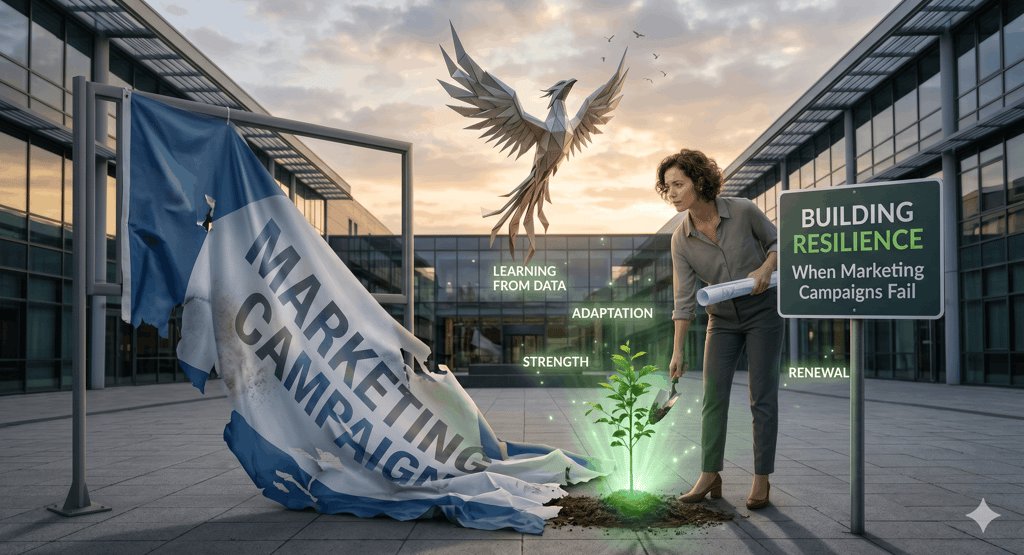

Building Resilience When Marketing Campaigns Fail
If you've been in marketing long enough, you've experienced it.
You spend weeks planning a campaign.
You research your audience.
You create content.
You allocate budget.
You launch with excitement and optimism.
Then the results arrive.
And they're disappointing.
The traffic doesn't come.
The leads don't convert.
The engagement stays low.
The campaign that seemed so promising simply doesn't perform.
I've been there.
After more than 12 years in internet marketing and hotel marketing, I can honestly say that some of my greatest professional lessons came not from successful campaigns, but from failed ones.
At the time, those failures felt frustrating.
Sometimes even personal.
But looking back, they taught me resilience, patience, and adaptability—qualities that are often more valuable than any marketing tactic.
Growing up in Coastal Karnataka, I learned early that not everything goes according to plan. Fishermen cannot control the sea. Farmers cannot control the rain. Business owners cannot control every market condition.
What they can control is how they respond.
That lesson has stayed with me throughout my marketing career.
In this article, I'll share practical insights on building resilience when marketing campaigns fail, how to recover emotionally and strategically, and why setbacks often become stepping stones toward future success.
Why Campaign Failure Is More Common Than You Think
One of the biggest myths in marketing is that successful professionals rarely fail.
The truth is quite the opposite.
Marketing Is Built on Experimentation
Every campaign involves uncertainty.
No matter how much data you have:
Customer behaviour changes.
Algorithms evolve.
Market conditions shift.
Competitors adapt.
Trends emerge unexpectedly.
Because of this, even experienced marketers launch campaigns that underperform.
Failure Is Not Always Poor Execution
Sometimes campaigns fail despite solid planning.
Possible reasons include:
Incorrect audience assumptions
Timing issues
Economic conditions
Increased competition
Platform changes
Consumer sentiment shifts
A failed campaign doesn't automatically mean you failed as a marketer.
The Reality of Testing
Digital marketing is essentially a continuous process of testing ideas.
Some tests succeed.
Others provide lessons.
Both have value.
A Lesson From Coastal Karnataka
Every monsoon season reminds us that nature operates on its own timetable.
Farmers may prepare carefully, yet weather conditions can still create challenges.
The same principle applies to marketing.
Preparation matters.
But outcomes are never fully guaranteed.
[Image Suggestion: Coastal Karnataka fishermen preparing boats before heading into uncertain sea conditions]
The Emotional Impact of Campaign Failure
Many marketing discussions focus on analytics and strategy.
Few discuss emotions.
Yet emotions play a significant role in resilience.
Why Failure Feels Personal
When we invest time, creativity, and effort into a campaign, we naturally become attached to the outcome.
When results disappoint, common reactions include:
Frustration
Self-doubt
Anxiety
Embarrassment
Loss of motivation
I've experienced all of them at different points in my career.
Separating Identity From Results
One of the most important mindset shifts I learned was this:
A failed campaign is an event, not an identity.
You are not your latest campaign.
You are not your latest ranking.
You are not your latest conversion rate.
Those metrics provide information.
They do not define your worth.
What Research Says About Resilience
According to the American Psychological Association (APA), resilience involves adapting successfully in the face of adversity, challenges, or significant stress.
Resilience is not about avoiding setbacks.
It's about recovering and moving forward.
That distinction is important.
Common Reasons Marketing Campaigns Fail
Before improving resilience, it helps to understand why campaigns often struggle.
1. Audience Misalignment
The message may not resonate with the intended audience.
2. Weak Offer
Even excellent marketing cannot fully compensate for an offer that lacks perceived value.
3. Poor Timing
Launching the right campaign at the wrong time can reduce effectiveness.
4. Unrealistic Expectations
Sometimes the campaign performs reasonably well, but expectations were unrealistic.
5. Insufficient Data
Making decisions without enough information can increase risk.
6. External Factors
Economic changes, industry shifts, or platform updates can affect outcomes.
The Important Takeaway
Failure is rarely caused by a single factor.
Understanding this helps avoid oversimplified conclusions.
How Resilient Marketers Respond to Failure
The difference between successful marketers and struggling marketers is often not talent.
It's response.
Step 1: Pause Before Reacting
When results disappoint, avoid immediate emotional decisions.
Examples include:
Canceling everything immediately
Blaming team members
Abandoning an entire strategy
Give yourself time to evaluate objectively.
Step 2: Analyze the Data
Ask:
What worked?
What didn't?
What surprised us?
What can be improved?
Step 3: Focus on Learning
Every campaign generates information.
Even unsuccessful campaigns provide valuable insights.
Step 4: Document Lessons
I encourage marketers to maintain a learning log.
Document:
Key observations
Mistakes
Opportunities
Future tests
This habit transforms failures into assets.
Step 5: Take Action Quickly
Reflection matters.
But endless reflection becomes stagnation.
Learn the lesson and move forward.
[Image Suggestion: Marketer reviewing campaign reports with notes and analytics dashboards]
Building Resilience Through Small Wins
One challenge after campaign failure is rebuilding confidence.
This is where small wins become important.
Why Small Wins Matter
Research by Teresa Amabile and Steven Kramer in The Progress Principle highlights how progress in meaningful work contributes to motivation and positive emotions.
Small wins create momentum.
Examples of Small Wins
After a disappointing campaign, focus on achievable improvements:
Better click-through rates
Improved landing pages
Increased engagement
Higher email open rates
Improved website speed
These incremental improvements help restore confidence.
The Compound Effect
Small improvements accumulate.
Today's minor optimization may contribute to tomorrow's major success.
What I Tell Clients
Don't wait for a breakthrough to feel encouraged.
Notice progress wherever it appears.
Progress often arrives quietly.
Protecting Your Mental Energy During Difficult Periods
Resilience isn't only strategic.
It's also personal.
Marketing Can Be Emotionally Demanding
Constant performance pressure can become exhausting.
That's why protecting mental energy matters.
Maintain Healthy Perspective
A campaign matters.
But it isn't everything.
Family matters.
Health matters.
Relationships matter.
Peace of mind matters.
The Importance of Recovery
Research from the World Health Organization continues to emphasize the relationship between workplace stress and overall well-being.
Recovery is not a luxury.
It's a necessity.
Habits That Help
During difficult periods, I focus on simple routines:
Morning walks
Exercise
Reading
Time with family
Outdoor activities
These habits create emotional stability.
A Personal Reflection
Some of my clearest marketing ideas have arrived not while staring at a dashboard, but while walking near the coast, listening to the waves, and stepping away from work temporarily.
Sometimes distance creates clarity.
[Image Suggestion: Peaceful coastal walking path in Karnataka during sunrise]
Lessons Nature Teaches About Resilience
Living in Coastal Karnataka has influenced how I think about setbacks.
Nature provides constant reminders about resilience.
The Monsoon Returns Every Year
No matter how intense the summer heat becomes, the monsoon eventually arrives.
Challenges are temporary.
Conditions change.
Coconut Trees Survive Strong Winds
Coconut trees bend.
They adapt.
Yet they remain standing.
Their strength comes partly from flexibility.
Businesses benefit from the same quality.
The Ocean Never Stops Moving
The sea encounters obstacles constantly.
Yet it continues forward.
Not through force alone.
Through persistence.
Marketing Requires Similar Resilience
Campaign setbacks are inevitable.
The ability to adapt determines long-term success.
Practical Strategies for Recovering After a Failed Campaign
Let's turn resilience into action.
Conduct a Post-Campaign Review
Evaluate:
AreaQuestionsAudienceWas targeting accurate?MessageDid it resonate?OfferWas value clear?TimingWas launch timing ideal?ChannelsWere the right platforms used?ResultsWhat metrics improved?
Focus on Controllable Factors
You can't control:
Algorithm changes
Competitor actions
Market fluctuations
You can control:
Content quality
Testing
Optimization
Customer experience
Create a Recovery Plan
Instead of dwelling on failure:
Identify lessons.
Prioritize improvements.
Launch a new test.
Measure results.
Repeat.
Avoid Comparison
Social media often showcases success stories while hiding failures.
Remember:
Every successful marketer has experienced setbacks.
Many simply don't talk about them publicly.
Turning Failure Into Long-Term Advantage
Interestingly, some failed campaigns become future advantages.
Why?
Because they teach lessons competitors never learn.
Failure Creates Experience
Experience isn't only built through success.
It's built through problem-solving.
Resilient Marketers Develop Better Judgment
Over time, repeated testing improves:
Decision-making
Audience understanding
Strategic thinking
Risk management
The Competitive Advantage
Many people quit after disappointment.
Resilient marketers continue learning.
That persistence often becomes their greatest advantage.
Success Often Looks Different Than Expected
Looking back on my career, some campaigns I expected to succeed failed.
Some campaigns I expected little from performed remarkably well.
Marketing has a way of humbling all of us.
That's why resilience remains so valuable.
Conclusion
Building resilience when marketing campaigns fail is one of the most important skills any marketer, entrepreneur, or business owner can develop.
Campaign failure is not evidence that you're incapable.
It's evidence that you're participating in a field that requires experimentation, learning, and adaptation.
The most successful marketers aren't those who avoid failure entirely.
They're the ones who recover quickly, learn continuously, and keep moving forward.
Growing up in Coastal Karnataka taught me that setbacks are a natural part of life. The sea changes. The weather changes. Markets change.
What matters most is how we respond.
Every failed campaign contains lessons.
Every lesson creates growth.
And every setback has the potential to become a stepping stone toward future success.
So the next time a campaign doesn't perform as expected, remember this:
Failure is not the end of the story.
It's often the beginning of a better one.
FAQs
1. Why do marketing campaigns fail?
Campaigns may fail due to audience mismatch, poor timing, weak offers, competitive pressures, or changing market conditions.
2. How can I recover from a failed marketing campaign?
Analyze the data, identify lessons, document insights, and implement improvements for future campaigns.
3. What is resilience in marketing?
Resilience is the ability to adapt, learn, and continue moving forward after setbacks or disappointing results.
4. Should I stop a campaign immediately if results are poor?
Not always. Evaluate performance carefully before making major decisions. Some campaigns need optimization rather than termination.
5. How do I stay motivated after failure?
Focus on small wins, learning opportunities, and long-term progress rather than short-term setbacks.
6. Are failed campaigns normal in digital marketing?
Yes. Even experienced marketers regularly test ideas that don't perform as expected.
7. How can teams build resilience together?
Encourage open discussion, celebrate learning, document lessons, and avoid assigning blame.
8. What is the biggest lesson from failed campaigns?
The biggest lesson is often that improvement comes through adaptation, not perfection.
click here to know about Audience Building Through Thoughtful Posting
Anudeep Hegde
Seasoned Internet Marketing Specialist and Hotel Marketing Expert with over 12+ years of experience helping brands grow and succeed online.
Get in touch
connect@anudeephegde.com
+91 9449507266, +91 9731258717
© 2025. All rights reserved. @Trip Nirvigna Marketing