Creating a Personal Growth Plan for 2026
Learn how to create a practical personal growth plan for 2026 with actionable goals for health, career, finances, relationships, and lifelong learning.
Anudeep Hegde
5/26/20267 min read
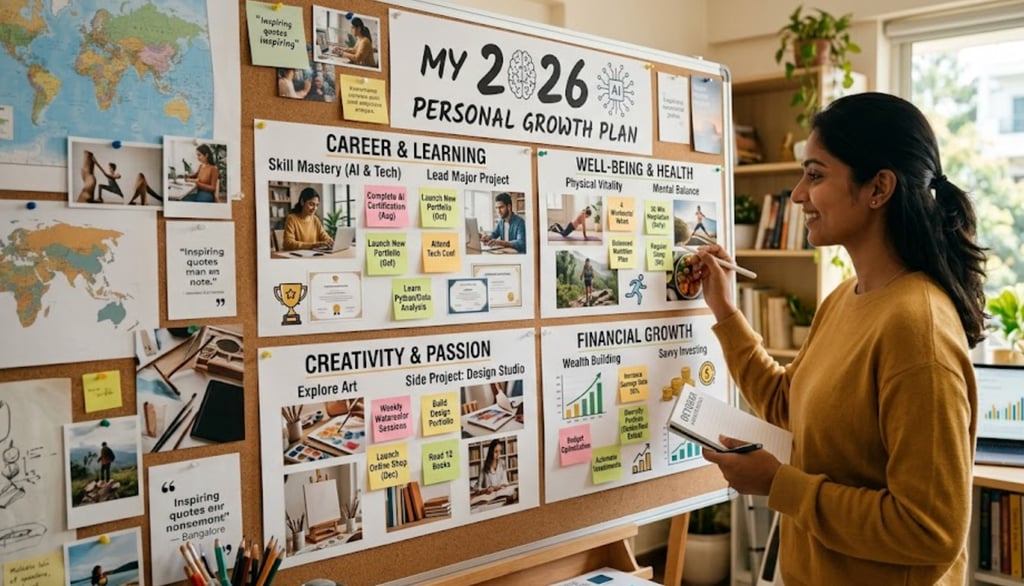
Creating a Personal Growth Plan for 2026
Every December and January, I notice the same pattern.
People set ambitious goals. They want to get healthier, save more money, grow their careers, spend more time with family, read more books, or finally launch that business idea they've been postponing.
A few weeks later, life gets busy.
Work deadlines pile up.
Family responsibilities take priority.
Unexpected challenges appear.
And those carefully written resolutions quietly disappear.
I've experienced this myself more than once.
Over the last 12+ years working in digital marketing and hotel marketing, I've learned that meaningful personal growth rarely happens because of motivation alone. It happens when we create a realistic plan, build consistent habits, and make steady progress throughout the year.
That's why I believe creating a personal growth plan for 2026 is one of the most valuable investments you can make—not just for your career, but for your health, relationships, finances, mindset, and overall quality of life.
Growing up in Coastal Karnataka taught me something important about growth. Whether it's a coconut tree, a farm, or a small family business, meaningful progress takes time. Nature doesn't rush. The best results often come from patient, consistent effort.
In this guide, I'll share a practical framework for building a personal growth plan for 2026 that is realistic, sustainable, and aligned with the life you truly want to live.
Why Most Personal Development Plans Fail
Before creating a better plan, it's worth understanding why many plans fail.
The issue usually isn't lack of ambition.
It's lack of structure.
Common Mistakes People Make
Many people:
Set too many goals at once
Focus only on career success
Ignore physical and mental health
Create unrealistic timelines
Depend entirely on motivation
Never review their progress
Research in behavioural psychology consistently shows that people are more likely to achieve goals when they are specific, measurable, and connected to regular habits rather than vague intentions.
For example:
Instead of:
"I want to get healthier."
Try:
"I will walk 30 minutes five days per week."
Instead of:
"I want to save money."
Try:
"I will automatically transfer ₹5,000 into savings on the first of every month."
Clarity creates momentum.
Personal Reflection
One lesson I've learned over the years is that success without balance rarely feels satisfying.
A strong career matters.
But so do health, family, learning, and peace of mind.
A good personal growth plan should improve your entire life—not just one part of it.
[Image Suggestion: Person writing goals in a notebook while sitting outdoors near a coastal sunrise.]
Start with a Personal Life Audit
Before deciding where you want to go, understand where you currently stand.
Think of this as taking inventory.
Evaluate These Six Areas
Rate yourself from 1 to 10 in each category:
Life AreaCurrent ScorePhysical HealthMental WellbeingCareer & BusinessFinancesRelationshipsLearning & Growth
Be honest.
No one else needs to see these numbers.
The purpose is awareness.
Questions to Ask Yourself
Health
Am I physically active?
Am I sleeping enough?
Do I feel energetic most days?
Career
Am I learning new skills?
Am I growing professionally?
Am I satisfied with my work?
Finances
Do I have savings?
Am I investing consistently?
Am I managing expenses wisely?
Relationships
Am I spending quality time with family?
Do I maintain meaningful friendships?
Do I communicate well?
Personal Growth
What new skills am I developing?
What books am I reading?
How am I challenging myself?
This simple exercise often reveals where growth is needed most.
Set Meaningful Goals for 2026
The next step in creating a personal growth plan for 2026 is identifying goals that genuinely matter to you.
Not goals that impress others.
Not goals copied from social media.
Goals that align with your values.
The Four Core Categories
I recommend setting goals in four areas.
1. Health Goals
Without health, every other achievement becomes harder.
According to the World Health Organization (WHO), regular physical activity contributes significantly to overall health and wellbeing.
Examples:
Walk 8,000–10,000 steps daily
Exercise four times weekly
Improve sleep habits
Reduce processed food consumption
Maintain healthy hydration
2. Career Goals
Professional growth creates opportunities and confidence.
Examples:
Earn a certification
Improve public speaking
Learn AI tools
Master SEO strategies
Launch a side project
3. Financial Goals
Financial stability reduces stress and increases freedom.
Examples:
Build an emergency fund
Increase monthly savings
Pay off debt
Begin investing regularly
Create additional income streams
4. Personal Goals
These often provide the deepest fulfillment.
Examples:
Read 12 books
Travel more
Learn a language
Volunteer locally
Spend more time with family
Keep Goals Realistic
A plan that requires perfection is unlikely to survive reality.
Choose goals that challenge you without overwhelming you.
Build Systems Instead of Depending on Motivation
This may be the most important section of this article.
Most people focus on goals.
Successful people focus on systems.
Goals vs Systems
GoalSystemLose weightDaily walk after breakfastRead booksRead 10 pages before bedSave moneyAutomatic monthly transferLearn skillsStudy 20 minutes dailyGrow businessWeekly business review
Goals provide direction.
Systems create results.
Why Systems Work
Motivation changes.
Schedules change.
Weather changes.
Life changes.
Systems keep moving.
In Coastal Karnataka, fishermen don't wait for motivation before preparing their boats.
Farmers don't skip planting because they aren't inspired.
Progress comes through repeated action.
The same principle applies to personal growth.
My Favourite Question
Instead of asking:
"How do I stay motivated?"
Ask:
"What system can make this easier?"
That shift alone can transform results.
[Image Suggestion: Organized planner with daily habits, goals, and progress tracking sheet.]
Create a Monthly Growth Framework
Big annual goals often feel overwhelming.
Breaking them into monthly milestones makes them manageable.
Example Personal Growth Plan
January – Foundation
Define goals
Create routines
Organize finances
February – Health Focus
Improve sleep
Build exercise habit
Plan healthier meals
March – Learning Month
Begin online course
Read two books
Attend webinar
April – Financial Review
Review expenses
Increase savings
Evaluate investments
Continue adjusting priorities throughout the year.
Monthly Reflection Questions
At the end of each month ask:
What went well?
What challenges appeared?
What did I learn?
What should I improve next month?
Regular reflection prevents drift.
Small corrections throughout the year create major improvements over time.
Prioritize Health, Energy, and Mental Wellbeing
Many personal growth plans focus heavily on productivity while ignoring health.
That's a mistake.
Your health is the foundation supporting every goal.
Sleep Matters More Than Most People Think
According to the U.S. Centers for Disease Control and Prevention (CDC), adults generally require at least seven hours of sleep per night for optimal health.
Sleep influences:
Memory
Focus
Decision-making
Mood
Productivity
Physical Activity Supports Growth
The WHO recommends regular physical activity for maintaining physical and mental wellbeing.
You don't need expensive gym memberships.
Simple options include:
Walking
Cycling
Yoga
Swimming
Sports
Home workouts
The Coastal Karnataka Advantage
One benefit of living in this region is access to beautiful natural surroundings.
Morning walks near the beach.
Cycling through village roads.
Walking among coconut groves.
Spending time outdoors improves mental clarity and reduces stress.
Some of my best ideas for business and life have arrived during simple walks—not while sitting in front of a computer.
Don't Ignore Mental Health
Personal growth isn't only about achievement.
It's also about emotional wellbeing.
Protect time for:
Reflection
Rest
Family conversations
Spiritual practices
Hobbies
Nature
Growth should improve life, not consume it.
Track Progress Without Becoming Obsessed
One reason people abandon goals is unrealistic expectations.
Progress is rarely linear.
Some months will be excellent.
Others will be difficult.
That's normal.
Use a Simple Tracking Method
Track:
Workouts completed
Books read
Savings achieved
Skills learned
Family activities
Monthly wins
Celebrate Small Victories
Many people wait for major achievements before feeling successful.
That's unnecessary.
Celebrate:
First week completed
New habit established
Consistent effort
Small improvements
Momentum grows through recognition.
The Power of Consistency
Research from behavioural science consistently shows that repeated small actions often produce significant long-term outcomes.
Success is usually less dramatic than social media suggests.
And far more sustainable.
[Image Suggestion: Progress tracker with completed habits, books, exercise goals, and family milestones.]
Build a Life You Actually Want to Live
The purpose of a personal growth plan for 2026 isn't becoming busier.
It's becoming better aligned.
Ask Yourself These Questions
What kind of person do I want to become?
What matters most to me?
What habits support that vision?
What distractions should I eliminate?
What relationships deserve more attention?
A Lesson From Family Life
One thing I deeply appreciate about our culture in Karnataka is the importance placed on relationships.
Family meals.
Festivals.
Community gatherings.
Helping neighbours.
These experiences remind us that growth isn't measured only by income or achievements.
It's also measured by:
Character
Health
Kindness
Contribution
Relationships
A truly successful year strengthens all of these areas.
Your Personal Growth Plan for 2026: Quick Action Checklist
Before finishing this article, save this checklist:
✓ Complete a life audit
✓ Set goals in health, career, finances, and personal growth
✓ Focus on systems, not motivation
✓ Break annual goals into monthly milestones
✓ Prioritize sleep and exercise
✓ Schedule learning time
✓ Review progress monthly
✓ Celebrate small wins
✓ Protect family relationships
✓ Spend more time in nature
✓ Stay flexible and keep improving
Small actions repeated consistently can create extraordinary results over twelve months.
Conclusion
Creating a personal growth plan for 2026 is not about becoming a different person overnight.
It's about becoming a slightly better version of yourself each day.
Over the years, I've learned that meaningful growth rarely comes from dramatic changes. It usually comes from small decisions repeated consistently—waking up a little earlier, learning a new skill, taking better care of health, saving regularly, spending quality time with family, and continuing to improve one step at a time.
As we move into 2026, don't focus only on what you want to achieve.
Focus on who you want to become.
Build systems that support your goals.
Stay patient with yourself.
Celebrate progress.
And remember that the most meaningful success is often balanced success—good health, meaningful work, strong relationships, financial stability, and peace of mind.
Just like the steady waves along the coast of Karnataka, small consistent actions eventually shape something remarkable.
FAQs
1. What is a personal growth plan?
A personal growth plan is a structured roadmap that helps improve different areas of life such as health, career, finances, relationships, and personal development through clear goals and actionable steps.
2. Why is a personal growth plan important for 2026?
It provides direction, improves focus, encourages accountability, and helps ensure consistent progress toward meaningful life goals throughout the year.
3. How many goals should I include in my growth plan?
Most people benefit from focusing on 4–8 meaningful goals across key life areas rather than trying to improve everything at once.
4. What are the best areas to focus on for personal growth?
Health, career, finances, relationships, learning, emotional wellbeing, and personal values are among the most impactful areas.
5. How often should I review my personal growth plan?
A monthly review is ideal. It allows you to track progress, identify challenges, and make adjustments before small issues become larger problems.
6. What if I miss my goals during the year?
Missing milestones is normal. Review what happened, adjust your approach, and continue moving forward rather than abandoning the plan entirely.
7. Should I focus more on habits or goals?
Both matter, but habits are often more important because they create the daily actions that ultimately produce goal achievement.
8. Can personal growth improve professional success?
Absolutely. Better health, stronger communication skills, emotional resilience, lifelong learning, and improved habits often contribute directly to career and business growth.
.
click here to know about LinkedIn Lead Generation Strategies for India
Anudeep Hegde
Seasoned Internet Marketing Specialist and Hotel Marketing Expert with over 14+ years of experience helping brands grow and succeed online.
Get in touch
connect@anudeephegde.com
Bangalore & Kundapura, India
© 2026. All rights reserved. @Trip Nirvigna Marketing
+91 9449507266, +91 9731258717