India vs Southeast Asia: The Tourism Gap
After my January trip from Singapore to Laos, one question stayed with me: why do countries like Laos, Thailand and Vietnam attract so many international tourists—while India, with far more to offer, often feels harder to travel? In this blog, I compare the real on-ground differences—simplicity, tourist flow, cleanliness, safety perception, and overall ease—and take reference from Nepal, Bhutan, and Sri Lanka to highlight what’s working for them. It’s not about who has more attractions—it’s about who delivers a smoother, calmer experience.
Anudeep Hegde
2/16/20264 min read
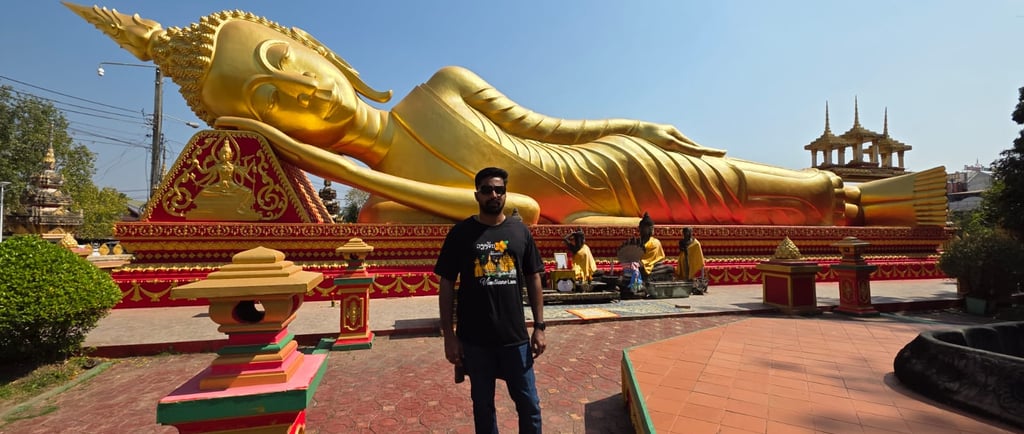
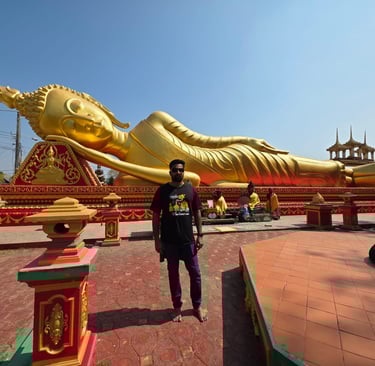
I travelled to Laos only once — this January 2026. I flew from Singapore to Laos, and the shift hit me immediately.
Not because Laos is “bigger” or has “more attractions” than India — it doesn’t. But because everything felt… lighter. Easier. More predictable. More peaceful.
And that made me zoom out.
It’s not only Laos. Even countries like Thailand and Vietnam — and other Southeast Asian destinations — consistently pull international tourists. And closer to home, places like Nepal, Bhutan, and Sri Lanka also attract a strong share of foreign travelers.
So the real question is not “who has more to offer?” Because India clearly has the most on paper.
The real question is: why do many foreign tourists find it easier to choose these countries, enjoy them, and recommend them — while India often feels like a difficult decision?
This blog is my attempt to highlight that difference.
1) Simplicity beats scale
India is not a destination. It’s an entire universe. That’s our strength — but for international travelers, it can become a problem.
In many Southeast Asian countries, the travel experience feels simple: fewer decisions every day, fewer moving parts, shorter travel times, and a calmer pace.
In India, tourists often feel like they must plan everything perfectly — or it can get messy: too many options, too many “small surprises”, and too much sensory overload.
Most travelers don’t want to “solve” a holiday. They want to live it. And honestly, this includes me too. I’m working almost all the time when I’m not on a holiday — so the whole purpose of travel is to relax and enjoy.
2) Tourist flow is designed, not accidental
This is a big difference I noticed.
In many Southeast Asian countries, there is a natural tourist flow. It’s like the system gently guides you. Also, most attractions are concentrated around main tourist cities. India is so huge that we have multiple great cities and multiple tourist hubs — but many of these are far away from each other.
What works well in other countries: easy-to-understand routes, clear tourist hubs, simple transport connections, predictable stay options. The traveler doesn’t feel lost.
In India, the places are incredible — but the “flow” isn’t always obvious. So the tourist ends up doing extra work: figuring routes, negotiating transport, guessing prices, constantly checking what’s safe / genuine / worth it.
When a tourist is busy “managing” the trip, they stop enjoying it fully.
3) Less hassle = better memories
This one is sensitive, but it’s real.
In many of these countries, tourists experience less aggressive selling, fewer constant interruptions, less intense bargaining culture, and fewer situations that feel like scams.
So the memories become about sunsets, cafés, walks, temples, nature, conversations.
In India, tourists often deal with constant negotiation, transport confusion, people pushing services, and trust issues (even if most people are genuinely good).
Even if the destination is stunning, the friction changes how they remember it.
4) Cleanliness and calm matter more than monuments
India has world-class monuments and heritage. But tourists remember the full environment around it: the streets, the crowds, the noise, the cleanliness, the last 500 meters to the site.
Many smaller countries win here because the overall public experience feels calmer and cleaner in tourist areas.
For today’s traveler, the experience matters more than the checklist.
5) They sell “feelings,” not just attractions
This is something we underestimate.
Many Southeast Asian and nearby destinations don’t just sell places — they sell feelings: peace, ease, safety, slow life, comfort, nature + simplicity.
India often sells heritage, monuments, history, spirituality.
But the modern traveler is chasing an emotional outcome. India can deliver the strongest emotional experiences in the world — but if the journey feels heavy, tourists won’t reach that “wow” moment easily.
6) Safety perception changes everything
Whether we like it or not, perception drives tourism.
Tourists (especially solo travelers) choose places where they feel confident moving around, respected, and supported if something goes wrong.
Even if many parts of India are safe and welcoming, inconsistent experiences + global narratives can reduce confidence.
Tourism is emotional spending. People don’t buy facts. They buy comfort.
7) Nepal, Bhutan, Sri Lanka show something important
What I find interesting is: these countries are not trying to “out-offer” India.
They focus on clear positioning, controlled experiences, smoother tourist movement, strong first impressions, and a feeling of calm and safety.
They may have fewer attractions than India, but they often deliver a cleaner, simpler travel story. And that story sells.
The irony (and the opportunity)
India has the deepest culture, the strongest spirituality, insane diversity, the best food experiences, and everything from Himalayas to beaches to wildlife to festivals. So what’s missing? Not attractions.
Execution. Experience design. Empathy for a foreign traveler’s first impression.
If India fixes basics in tourist zones, the impact will be massive: cleanliness near tourist areas, clear signages + information, predictable pricing systems, professional tourist support / grievance handling, soft-skill training for drivers, guides, hotel and shop staff, and less harassment and less aggressive selling culture around key hotspots.
These aren’t impossible changes. They are management changes.
My bottom line
Southeast Asian countries (and even Nepal/Bhutan/Sri Lanka) don’t attract international tourists because they have more than India. They attract them because they feel easier, calmer, and more predictable.
India doesn’t need to become another Thailand or Vietnam. India needs to become a more comfortable version of itself for international travelers — so that our “more to offer” becomes something tourists can actually enjoy without stress.
Because if we improve the experience, India won’t just compete. India can lead.
Anudeep Hegde
Seasoned Internet Marketing Specialist and Hotel Marketing Expert with over 14+ years of experience helping brands grow and succeed online.
Get in touch
connect@anudeephegde.com
Bangalore & Kundapura, India
© 2026. All rights reserved. @Trip Nirvigna Marketing
+91 9449507266, +91 9731258717