Iran–US–Israel War: A Wake-Up Call and a Big Opportunity for Tourism in India
Explore how the Iran–US–Israel War is affecting global travel and why tourism in India has a major opportunity—if safety, service, and visitor experience improve.
Anudeep Hegde
3/10/202620 min read

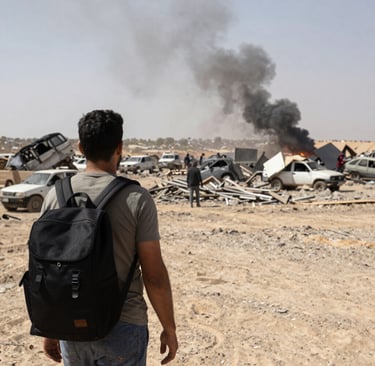
Iran–US–Israel Conflict: A Wake-Up Call and Opportunity for Tourism in India
The Iran–US–Israel conflict is first and foremost a human tragedy and a geopolitical crisis. But it is also reshaping global travel in practical ways. Airlines have rerouted flights, adjusted schedules, added fuel surcharges, and raised fares as Middle Eastern airspace disruption and higher jet-fuel costs ripple through international aviation networks. Reuters reported that airlines in Asia and Europe have already responded with price increases and schedule changes, while Lufthansa has shifted capacity away from cancelled Middle Eastern destinations toward routes such as Singapore and Bangkok.
That matters because the Middle East is not only a destination region. It is also one of the world’s most important transit corridors linking Europe, Asia, Africa, and Australasia. When that corridor becomes expensive, uncertain, or operationally fragile, traveler behavior changes beyond the region itself. A destination strategist would read this as a substitution moment: many travelers do not stop traveling altogether, but they start looking for alternatives that feel simpler, more stable, and more worthwhile. Reuters, citing Tourism Economics, reported that the Middle East could see 23 million to 38 million fewer travelers in 2026 than earlier expected, with a potential loss of about $34 billion to $56 billion in visitor spending.
That is where tourism in India enters the conversation.
This is not about exploiting conflict. India should never market itself with the tone of “come here because another region is in trouble.” That would be insensitive and shortsighted. But it would also be unrealistic to ignore the shift. When aviation routes tighten, fares rise, and one of the world’s key travel corridors becomes harder to sell, destinations that offer depth, diversity, and value inside one country start looking more attractive. That creates a real opening for tourism in India — if India responds with maturity.
Why this conflict matters to the global travel industry
From a global travel perspective, the impact goes far beyond canceled vacations in the Gulf. The region functions as a major connector for long-haul travel. Reuters reported that airlines are passing on higher fuel costs, adjusting network plans, and warning that longer routes and tighter airspace could squeeze profitability and push up fares further. Qantas, SAS, Air New Zealand, Hong Kong Airlines, and Air India were among the carriers reported as increasing fares, fuel surcharges, or both.
Lufthansa’s response is especially revealing. Reuters reported that it shifted capacity from ten cancelled Middle Eastern destinations to Asian routes such as Singapore and Bangkok. That shows how major airlines are already reallocating traffic in response to the conflict. When airlines redeploy capacity, destination markets downstream also change. Some regions lose ease of access; others gain relevance.
This is why tourism professionals should see the conflict not just as a news story, but as a market signal. In uncertain periods, travelers usually become more selective. They look for destinations where each trip delivers more emotional value, more itinerary depth, and fewer avoidable hassles. India can meet that need — but only if its visitor experience is strong enough to convert curiosity into bookings.
India already has momentum — but potential alone is not enough
India is not starting from zero. Official Ministry of Tourism data published in January 2026 said India recorded 20.57 million international tourist arrivals in 2024, up 8.9% over 2023. Separate government data said India’s 2024 total was 14.85% above 2019 and that India ranked 20th globally by international tourist numbers.
That is important for two reasons. First, it shows India has already regained meaningful international tourism momentum. Second, it means India is already back in global travel consideration at scale. This is not a cold-start opportunity. It is a chance to move from recovery to repositioning. India is also active in international tourism outreach: the Ministry of Tourism participated at ITB Berlin 2026, one of the world’s most important travel trade events.
So the real question is no longer whether India has tourism potential.
The real question is whether tourism in India can convert global uncertainty into long-term trust.
The global travel expert’s perspective — what travelers will want now
When international travel is disrupted by conflict, fuel volatility, and airspace uncertainty, travelers tend to value three things more strongly: simplicity, depth, and reliability. That does not mean they stop wanting adventure. It means they want fewer moving parts, fewer unpleasant surprises, and a stronger sense that the destination is worth the emotional and financial investment.
India has a natural advantage here. Few countries can offer beaches, mountains, spirituality, food diversity, wildlife, wellness, heritage, road trips, and multigenerational travel in a single national market. That gives India unusual strength as a long-haul destination when travelers want fuller journeys rather than fragmented stopovers. India’s own official tourism messaging also points to wellness and medical tourism as high-potential segments.
But the global traveler’s test is not only, “Is India interesting?”
It is, “Will India feel dependable?”
That is where the opportunity becomes serious — and where the challenge begins.
The Indian travel expert’s perspective — where India is strong and where it still loses trust
Anyone who understands the Indian tourism market knows the truth is mixed. India has extraordinary tourism assets, but the end-to-end visitor experience remains uneven. The country has world-class luxury, unique spirituality, vast cultural depth, and remarkable regional variety. At the same time, visitor confidence can still be weakened by transport confusion, inconsistent public cleanliness, weak interpretation at destinations, pricing ambiguity, and the gap between premium private hospitality and the public environment outside the hotel gate.
This is where tourism in India still needs work. India rarely loses because it lacks things to show. India loses when the basics feel uncertain.
For an international visitor, trust is often shaped in very small moments:
the airport exit, the taxi experience, the first transfer, the visibility of help, the fairness of pricing, the quality of signage, and the cleanliness of public-facing spaces. These details decide whether India feels welcoming or exhausting.
Where tourism in India can realistically gain from this shift
India should not look at this moment as one broad demand wave. It should think in segments.
1. Long-haul travelers looking for richer single-country itineraries
As airline routes become more expensive or complicated, some travelers may prefer destinations where they can do more within one country instead of stitching together multiple stopovers or regional hops. India is unusually strong here. A single trip can include culture, nature, food, spirituality, and relaxation without crossing into a second country.
2. Wellness and slow-travel audiences
In periods of geopolitical stress, travel that feels emotionally grounding often becomes more attractive. India is well placed for Ayurveda, yoga, meditation, retreat-based stays, riverfront escapes, temple circuits, forest stays, and longer restorative journeys. The Ministry of Tourism has explicitly highlighted wellness and medical tourism as strong opportunity segments.
3. Families and multigenerational travelers
India can cater to multiple age groups at once. One itinerary can combine spiritual interest for older travelers, food and culture for adults, and landscape and activity for younger travelers. That flexibility becomes more valuable when families want fewer international complications and more value from one long-haul trip.
4. Diaspora and VFR-plus-leisure travel
India should not underestimate the power of its diaspora. In uncertain global conditions, visiting friends and relatives often remains more resilient than purely discretionary travel. The opportunity is to convert those trips into broader leisure spending through curated add-ons, premium domestic circuits, and easier regional planning.
5. Lesser-known Indian destinations
This may be the biggest opportunity of all. India has spent too long repeating the same destination circuit. But travelers looking for calm, emotional depth, and authenticity may respond even more strongly to cleaner, quieter, better-managed places than to overcrowded icons. Coastal Karnataka, heritage towns, coffee regions, temple belts, riverfront retreats, wellness stays, and forest-edge destinations can all become globally attractive if they are positioned well.
What India must improve right now if it wants to tap this moment
Opportunity alone is not enough. India must improve the points where visitor confidence is won or lost.
Arrival confidence
The first hour after landing matters. Travelers need smoother exits, clearer transport options, verified transfers, and visible support. India does have an official 24x7 multilingual tourist helpline promoted by the Ministry of Tourism, with support listed in English, Hindi, Arabic, French, German, Italian, Spanish, Japanese, Korean, Mandarin, Portuguese, and Russian. That is a strong asset — but it needs to be more visible inside the real traveler journey, not just on government pages.
Digital trust
India also benefits from an official government visa portal. At a time when travelers are more cautious about legitimacy and documentation, verified digital pathways matter more. The official Indian visa portal clearly identifies itself as the authorized application portal and includes e-Visa access.
Safety signaling
Safety is not only about crime statistics. It is also about how managed a destination feels. Official tourism material shows that several Indian states have deployed tourist police and that the Ministry continues to push safe-tourism measures and support systems. That is positive, but the on-ground visibility and consistency of these systems still matter far more than policy language alone.
Public cleanliness and civic presentation
A luxury property cannot fully compensate for a dirty beach approach, unmanaged market area, poor toilets, broken signage, or chaotic parking zone. India’s next tourism leap will depend not only on hotels and resorts, but on the quality of the public realm around them.
Pricing transparency
Many foreign travelers are willing to pay for quality. What they dislike is ambiguity. Tourism in India must reduce the number of moments where the visitor feels forced into negotiation, uncertainty, or informal price discovery.
Better storytelling
India often undersells itself through weak interpretation. A destination with incredible history and emotional value can still feel flat if it is poorly explained. Better guides, stronger multilingual storytelling, more context-rich experiences, and more thoughtful interpretation can substantially increase perceived value.
How India should market itself now — with maturity, not opportunism
This is the most important part.
India should never market itself with a message that directly compares itself to a region in crisis. That is not only insensitive; it is bad long-term branding. The right message is softer and smarter.
India should say:
if you are looking for a destination with depth, variety, warmth, wellness, and meaningful experiences across one country, India is ready to welcome you.
That approach works because it focuses on what India offers rather than what another region has lost.
The tone should emphasize:
ease
cultural depth
longer stays
trusted hospitality
wellness and slow travel
family-friendly variety
lesser-known destinations
value without chaos
That is how tourism in India can speak to the current moment without sounding exploitative.
What Different Indian Tourism Stakeholders Should Do Next
If India wants to convert this moment into long-term tourism growth, the response cannot come from one side alone. It has to be coordinated across government, state tourism bodies, hotels, tour operators, local transport systems, and destination storytellers. India already has the raw product. What it now needs is stronger execution, better trust-building, and a more globally aware visitor experience.
For the Government of India
The Government of India has to treat this as a strategic tourism-readiness moment, not just a promotional moment. The biggest opportunity is not in running more campaigns, but in making India easier, safer, and more confidence-inspiring for international visitors from the very first point of contact.
Arrival systems need immediate strengthening. The first hour in a country shapes the emotional tone of the trip. Airports, railway gateways, cruise arrival points, and border entry zones should feel organized, multilingual, and visitor-friendly. Official tourist helpdesks, verified taxi counters, QR-based transport guidance, and clearly visible emergency support information should be available in a way that is hard to miss. Many travelers are willing to navigate complexity inside the destination, but not at the point of arrival.
The government should also invest more seriously in digital trust infrastructure. The official visa process, tourist helplines, verified booking information, emergency support contacts, and transport guidance should all be integrated into one clearer digital journey. International travelers often worry about fake booking sites, unofficial operators, and unclear pre-arrival information. India can reduce that anxiety by offering one stronger official digital ecosystem that supports the traveler from visa stage to arrival stage.
A national push for tourist-facing transparency and protection is also needed. This includes stronger visible action against fraud, fake guides, misleading operators, transport exploitation, and unofficial tourism scams. It is not enough to have rules on paper. Travelers need to feel that the system is actively protecting them.
The Government of India should also work on destination readiness standards. A national framework could rate and support destinations based on arrival experience, cleanliness, wayfinding, safety visibility, multilingual support, accessible public information, and visitor complaint resolution. This would help shift focus from only promoting destinations to also preparing them properly.
There is also a need for international narrative building. India should project itself not just as a beautiful destination, but as a destination that is becoming more reliable, more thoughtful, and more globally prepared. That kind of messaging matters in moments when travelers are comparing destinations not only by scenery, but by confidence.
For State Tourism Boards
State tourism boards are perhaps the most important link between national tourism vision and on-ground destination reality. This is where India can either win or lose the traveler’s trust.
Most state tourism boards still over-focus on generic visuals and well-known icons. That is no longer enough. Travelers today want context, clarity, and confidence. States should move beyond only showcasing famous landmarks and begin packaging complete travel circuits that make planning easier. Instead of selling isolated places, they should sell connected experiences — culture plus cuisine, heritage plus nature, wellness plus local immersion, pilgrimage plus slow travel.
State tourism boards also need to invest far more in destination storytelling. India has some of the world’s richest history, architecture, spirituality, and ecological diversity, but many places still fail to explain themselves meaningfully. Better interpretation centers, multilingual signboards, heritage narratives, audio guides, local story trails, and trained destination guides can dramatically change how a traveler experiences a place.
Public infrastructure around tourism zones needs more attention. Tourists do not judge only hotels and attractions. They judge approach roads, parking areas, public toilets, beach access points, local markets, signage, and how well a place is maintained. State tourism boards should work more closely with urban local bodies, panchayats, and district administrations to ensure public-facing spaces match the brand promise being advertised online.
States should also identify and promote alternative regional circuits rather than repeatedly pushing already crowded destinations. This is a huge opportunity. Under-marketed areas with strong cultural identity, better calm, and manageable tourist volumes may now be more appealing than over-touristed hotspots. A well-curated, less chaotic destination can often outperform a famous but stressful one.
Finally, state tourism boards should begin segment-based marketing more seriously. Family travelers, solo women travelers, spiritual seekers, luxury travelers, nature travelers, diaspora visitors, and digital nomads all respond to different messaging. One-size-fits-all tourism campaigns are becoming weaker. States that understand audience segmentation will be better positioned to attract high-quality visitors.
For Hotels and Resorts
Hotels and resorts in India need to stop thinking of themselves as room providers alone. In the current travel environment, they are not just selling accommodation — they are selling reassurance, ease, and trust.
A guest’s concern today is not only whether the property looks good, but whether the journey around it will be smooth. That means hotels should take greater ownership of the full guest experience. Verified airport pickup, transparent taxi coordination, pre-arrival guidance, curated local experiences, honest travel advice, and responsive support should become part of the hospitality promise.
Properties should invest more in pre-arrival communication. Guests should receive simple and useful information before they arrive: how to reach the property, who will receive them, what transport is recommended, what local norms they should know, what emergency contacts are available, and what nearby experiences are worth their time. Good communication reduces anxiety and increases trust.
Hotels and resorts also need to think more carefully about destination packaging. A property located in a lesser-known region should not market itself like an isolated stay. It should market itself as a gateway to an experience. That includes local food trails, village walks, cultural encounters, nature experiences, heritage visits, local festivals, river journeys, temple routes, wellness sessions, or family-friendly activity design. The more complete the experience feels, the easier it becomes for a traveler to justify the trip.
Another major area is pricing transparency. Hidden charges, confusing inclusions, unclear activity rates, or inconsistent pricing damage trust quickly. International travelers especially value clarity. Hotels that communicate clearly on inclusions, transport costs, add-on services, cancellation terms, and local activity pricing will increasingly stand out.
Hotels also need better frontline hospitality training. Staff should be able to support travelers with confidence, sensitivity, and cultural awareness. This includes simple language support, local knowledge, problem-solving ability, and a calm guest-first attitude. In a market like India, where the environment outside the hotel can sometimes feel unpredictable, the property becomes an emotional anchor. That role should be taken seriously.
For Tour Operators
Tour operators have a particularly strong opportunity right now because they sit at the point where international interest becomes actual itinerary design. Their job is no longer just to string together locations. Their job is to reduce friction and increase confidence.
India itineraries often suffer from one major problem: they are too crowded, too rushed, and too exhausting. Tour operators should design calmer, better-paced journeys that allow travelers to actually absorb the destination rather than merely cover it. This is especially important if India wants to appeal to travelers seeking emotional value and stability in a volatile global environment.
Operators should also rethink how they structure itineraries. Instead of building plans around maximum sightseeing, they should build around minimum friction and maximum depth. Fewer hotel changes, fewer long road transfers without purpose, more meaningful pauses, and more coherent regional storytelling can make India feel far more premium.
Verified service networks are crucial. Tour operators should work only with trusted transport providers, trained guides, reliable local partners, and transparent activity operators. The global traveler today is not just buying an itinerary. They are buying the confidence that someone has carefully filtered the chaos for them.
There is also an opportunity for operators to build specialized India products. Wellness itineraries, spiritual circuits, women-only travel, luxury slow travel, culinary trails, heritage immersion journeys, family-friendly regional holidays, and lesser-known coastal or hill experiences all have growing appeal. India is strong when it is specific. Generic “India tour packages” no longer feel compelling enough.
Tour operators should also improve how they communicate India. Instead of selling the country as intense and overwhelming, they should show that India can also be elegant, restorative, intimate, and deeply personal. That shift in tone can make a major difference to how first-time international travelers perceive the destination.
For Destination Marketers and Creators
Destination marketers, storytellers, photographers, filmmakers, travel writers, and digital creators have a very important role in shaping perception. In many cases, they influence aspiration even before a traveler reads a brochure or speaks to a travel company.
The biggest need right now is more mature storytelling. India should not be marketed only through loud visuals, crowds, festivals, or dramatic stereotypes. Those are part of India, but they are not the whole story. Many global travelers today are also looking for softness, slowness, silence, beauty, design, wellness, rivers, forests, mindful stays, local craft, and emotionally rich moments. Creators should help the world see that side of India more clearly.
This is especially important for under-marketed regions. Quieter destinations often lose attention because they do not have a dominant tourism narrative. Destination marketers can change that through thoughtful content that explains not only what a place looks like, but what it feels like, who it is for, what kind of stay it offers, how it compares in mood to mainstream destinations, and why it deserves time.
Creators should also become more useful, not just more aesthetic. Beautiful visuals alone are not enough anymore. Travelers want content that answers practical questions too: Is it easy to reach? Is it safe for families? Is it suitable for solo travelers? What is the experience really like? How many days are ideal? What nearby experiences make it worth the trip? Practical storytelling increases conversion.
There is also a strong need to present India with more regional nuance. India is not one tourism identity. Coastal Karnataka is not Rajasthan. Kerala is not Varanasi. Ladakh is not Goa. The more precisely creators can communicate the personality of a destination, the stronger India’s tourism positioning becomes.
Finally, destination marketers should help shift the narrative from “must-see places” to “must-feel experiences.” In a world where travelers are rethinking where and why they travel, emotional resonance matters more than volume of attractions. Destinations that feel honest, calm, and distinctive may now have more power than destinations that simply look famous.
India Must Make It Easier for Private Tourism Investment to Grow Responsibly
If India wants tourism to scale meaningfully over the next decade, it cannot depend only on government-led destination promotion, public campaigns, or a handful of large hotel brands. The next phase of tourism in India will come from wider private participation: boutique stays, design-led resorts, riverfront retreats, homestays, wellness properties, eco-lodges, adaptive reuse heritage stays, youth-focused hostels, and experience-first hospitality brands that speak to different kinds of travelers. Tourism is already a major economic sector for India, contributing 5.22% of GDP on a total-impact basis and supporting 13.34% of total employment, according to official government data.
The challenge is that India often talks about tourism growth faster than it enables tourism creation. In many parts of the country, especially in coastal and scenic regions, entrepreneurs face long approval cycles, overlapping permissions, compliance uncertainty, land-use confusion, and heavy paperwork before they can even begin building or operating a tourism product. The Ministry of Tourism itself now explicitly lists “improving Ease of Doing Business,” “addressing tourism industry related policy and regulatory issues,” and a “National Single Window System” with a “High-powered Single Window cell for fast-track clearance of tourism-related investments” as priority functions. That is an important sign that the problem is real and already recognised at the policy level.
India needs more private stakeholders, not fewer
The biggest reason is simple: the government alone cannot create the diversity of tourism products modern travelers want. Public investment is essential for roads, airports, safety systems, public cleanliness, beaches, signage, and destination infrastructure. But the actual tourism experience — where people stay, how they unwind, what kind of ambiance they choose, what price point they can afford, and what style of travel they connect with — is driven largely by private enterprise.
A backpacker, a honeymoon couple, a wellness traveler, a family from Europe, a solo content creator, a luxury seeker, and a slow-travel enthusiast are not looking for the same kind of property. A healthy tourism ecosystem needs range: affordable stays, premium stays, unusual stays, local stays, character-led stays, and experience-led stays. That kind of variety comes only when more private players are able to enter the market with confidence.
The logic is not only commercial. It is also promotional. Every serious private tourism stakeholder becomes a storyteller for the destination. Every well-run resort, homestay, eco-retreat, heritage stay, design hotel, glamping site, café stay, or riverside property invests in visuals, marketing, customer outreach, digital visibility, and guest advocacy. That means the destination gets promoted by many voices, not just by the government. In practical terms, more credible private players mean more content, more campaigns, more niche positioning, more audience discovery, and ultimately more reasons for different kinds of tourists to choose India.
Why the next generation of travelers needs a wider tourism product base
Younger travelers are not choosing destinations only through brochures or traditional travel agents. They are discovering places through reels, visual storytelling, experience-led content, creator recommendations, and highly specific mood-based travel preferences. They often look for stays that feel distinctive, photogenic, design-conscious, local, intimate, and socially shareable. India has enormous potential here because its geography, culture, architecture, crafts, and landscapes allow for incredibly original hospitality concepts.
But such concepts usually come from entrepreneurs, creators, architects, local landowners, boutique operators, and regional hospitality founders — not from the state. Government can support the ecosystem, but it cannot realistically build thousands of unique, emotionally resonant, market-sensitive properties across India. Trying to over-control this space only weakens capacity. A smarter policy approach would be to let private innovation flourish while the state focuses on the public foundations that make tourism work.
CRZ and other regulatory barriers need reform, not blind removal
This is where the conversation needs maturity.
Rules like the Coastal Regulation Zone framework were not created without reason. The current CRZ notification exists to protect coastal ecosystems, ecologically sensitive areas, and hazard-prone coastlines, while regulating development along the coast and tidal water bodies. The 2019 CRZ framework continues to regulate development up to 500 metres along the sea front in many coastal stretches, and 50 metres along tidal influenced water bodies in specified cases, with Coastal Zone Management Plans and prior-clearance procedures built into the process.
So the answer is not to casually say “remove CRZ.” India cannot afford reckless coastal destruction in the name of tourism growth. That would be short-sighted and would eventually damage the very beaches, estuaries, backwaters, mangroves, and landscapes tourism depends on.
But it is equally true that the current system often becomes too slow, too layered, too interpretation-heavy, and too difficult for legitimate tourism entrepreneurs to navigate. The problem is not environmental protection itself. The problem is when approvals become unpredictable, fragmented, excessively paper-based, or vulnerable to delay and discretion. That discourages serious investors while doing little to stop poor-quality informal development.
India needs smarter regulation, not weaker regulation. That means:
clear zoning,
digitised approvals,
time-bound decision-making,
single-window processing,
standardised compliance checklists,
publicly visible approval timelines,
less duplication across departments,
and differentiated treatment for low-impact tourism projects versus large high-impact construction.
A small eco-stay, adaptive-reuse heritage property, or design-led low-density coastal retreat should not be trapped in the same practical maze as a much larger and more intrusive project. Better classification and faster, transparent approvals would help serious investors move forward without diluting environmental safeguards.
Too much paperwork kills momentum before tourism businesses even start
One of the most common problems in Indian tourism is not lack of ideas. It is loss of momentum.
Many entrepreneurs are willing to invest in tourism properties, especially in emerging regions. But by the time they deal with land-use clarity, local approvals, tourism registrations, pollution permissions, fire compliance, local body permissions, utility connections, coastal or environmental interpretations where relevant, and other licensing layers, both capital and enthusiasm get drained. This is exactly why online, trackable, time-bound systems matter.
A recent Odisha example is useful here. The state launched its “Go Homestay” portal specifically to simplify applications, improve transparency, and process homestay registrations and incentives through an online system, while also citing accommodation shortages in parts of the state. That kind of model shows the direction India should move in more broadly: fewer opaque processes, more digital workflows, and more confidence for smaller tourism entrepreneurs.
Government should focus on public infrastructure, not micromanaging tourism creativity
The state’s most important role in tourism is not to control every hospitality idea. It is to build the environment in which good tourism businesses can succeed.
That means focusing on:
clean roads and approach routes,
well-maintained beaches and waterfronts,
public toilets,
waste management,
safety systems,
tourist police visibility,
reliable signage,
street lighting,
parking discipline,
transport transparency,
digital grievance systems,
and cleaner public spaces around tourism zones.
These are the foundations that private players cannot solve alone.
A beautiful hotel cannot fully compensate for a filthy beach approach.
A stunning resort cannot fix taxi harassment outside the gate.
A boutique property cannot single-handedly create destination safety.
A homestay owner cannot replace broken public infrastructure.
This is where government capacity should go first. Let the state build trust in the destination. Let private stakeholders build diversity in the product.
Reducing corruption and discretion is itself a tourism reform
Another uncomfortable but essential truth is that overly complex approval systems create room for rent-seeking, inconsistency, and informal gatekeeping. Every extra layer of unclear paperwork increases uncertainty. Every non-transparent approval point makes tourism investment riskier, especially for smaller entrepreneurs who do not have institutional lobbying power.
If India wants more ethical, high-quality tourism development, the approval process itself must become cleaner. Digitisation, public dashboards, application tracking, fixed service timelines, deemed approvals for low-risk categories where appropriate, and standardised checklists can reduce both delay and discretionary friction. This is not just governance reform. It is tourism reform.
More private investment means more choice, more jobs, and stronger destination branding
A destination becomes stronger when it offers variety. Some travelers want a wellness retreat. Some want a surfing hostel. Some want a luxury villa. Some want a heritage mansion. Some want a riverside glamping experience. Some want a simple homestay with local food and community connection. A mature destination market gives them options.
That diversity also spreads economic opportunity. More private hospitality investment means more construction activity, more design work, more local employment, more food supply chains, more transport demand, more guide services, more craft sales, and more repeat visitation. Official government positioning already frames tourism as a strategic growth driver because of its employment intensity, multiplier effect, and role in regional development.
In other words, enabling more tourism entrepreneurs is not only about creating more rooms. It is about creating more reasons for people to travel, stay longer, spend more, and speak about the destination afterwards.
The policy shift India really needs
India should move from a control-heavy mindset to an enablement mindset.
Not by weakening environmental responsibility.
Not by allowing reckless coastal construction.
Not by opening the floodgates to poor planning.
But by making it easier for serious, well-designed, sustainable, and market-relevant tourism projects to come alive.
The ideal policy direction would be:
protect ecology strongly,
simplify approvals radically,
digitise paperwork fully,
create transparent timelines,
reduce overlapping permissions,
support first-generation tourism entrepreneurs,
and encourage more private participation in emerging destinations.
That is how India builds a tourism ecosystem that is both more competitive and more responsible.
Final perspective
If India truly wants to become a global tourism power, it must stop treating private tourism investment as something to merely regulate and start treating it as something to intelligently enable. Government should build the public spine of tourism — infrastructure, safety, cleanliness, transparency, and civic order. Private stakeholders should be encouraged to build the hospitality layer — stays, experiences, design, storytelling, innovation, and traveler choice.
That combination is what creates world-class destinations.
And in the years ahead, the destinations that grow fastest will not necessarily be the ones with the most government advertising. They will be the ones where public systems work well and private creativity is allowed to flourish.
The bigger lesson for tourism in India
The Iran–US–Israel conflict is changing airline economics, routing decisions, and traveler confidence in real time. Reuters has reported rising fares, higher fuel costs, airspace disruption, and airline capacity shifts. Tourism Economics, cited by Reuters, has warned that the Middle East could lose 23 million to 38 million travelers this year relative to earlier expectations. At the same time, India has entered 2026 with genuine inbound momentum, backed by official figures showing 20.57 million international tourist arrivals in 2024 and growth above both 2023 and 2019 levels.
So yes, this is a wake-up call for tourism in India.
But it is not an automatic win.
India will not gain simply because another region has become unstable. India will gain only if it becomes easier to trust, easier to navigate, and more consistent in the way it welcomes visitors. If it improves the basics, markets with maturity, and delivers reliable experiences beyond the brochure, then this moment can become more than a temporary diversion of demand.
It can become a long-term shift in how the world sees India. And in tourism, trust always travels further than hype.
Sources readers can refer to
Airline, travel industries scramble with fallout from Middle East conflict
https://www.reuters.com/business/finance/airline-travel-industries-scramble-with-fallout-middle-eastern-conflict-2026-03-03/
Airlines raise fares as Middle East conflict lifts fuel costs, disrupts flights
https://www.reuters.com/world/middle-east/airlines-begin-hike-fares-due-higher-fuel-prices-shares-stabilise-2026-03-10/
Qantas hikes fares on international routes as fuel costs surge on Mideast conflict
https://www.reuters.com/world/asia-pacific/qantas-hikes-fares-international-routes-fuel-costs-surge-mideast-conflict-2026-03-10/
Lufthansa adds more flights to Asia, Africa as Middle East war reshapes air travel
https://www.reuters.com/business/lufthansa-reports-2025-operating-profit-beat-2026-outlook-murky-due-middle-east-2026-03-06/
Iran conflict threatens Gulf tourism, undermining years of investment
https://www.reuters.com/world/middle-east/iran-conflict-threatens-gulf-tourism-undermining-years-investment-2026-03-03/
International Tourist Arrivals to India Surge to 20.57 million in 2024, Marking Strong Post-Pandemic Growth
https://www.pib.gov.in/PressReleasePage.aspx?PRID=2220111
Arrivals of Foreign Tourists
https://www.pib.gov.in/PressReleasePage.aspx?PRID=2220107
India holds bilateral meetings with Germany and Indonesia on enhancing tourism and sustainable travel at ITB Berlin 2026
https://tourism.gov.in/sites/default/files/2026-03/India%20holds%20bilateral%20meetings%20with%20Germany%20and%20Indonesia%20on%20enhancing%20tourism%20and%20sustainable%20travel%20at%20ITB%20Berlin%202026.pdf
24x7 Toll-free Tourist Helpline No.: 1800-11-1363, Short Code: 1363 - Languages Supported
https://tourism.gov.in/news-and-updates/24x7-toll-free-tourist-helpline-no-1800-11-1363-short-code-1363-languages
Anudeep Hegde
Seasoned Internet Marketing Specialist and Hotel Marketing Expert with over 12+ years of experience helping brands grow and succeed online.
Get in touch
connect@anudeephegde.com
+91 9449507266, +91 9731258717
© 2026. All rights reserved. @Trip Nirvigna Marketing