Tracking SEO Progress with Discipline
Learn how tracking SEO progress with discipline leads to sustainable rankings, better decisions, and long-term organic growth.
Anudeep Hegde
6/10/20266 min read
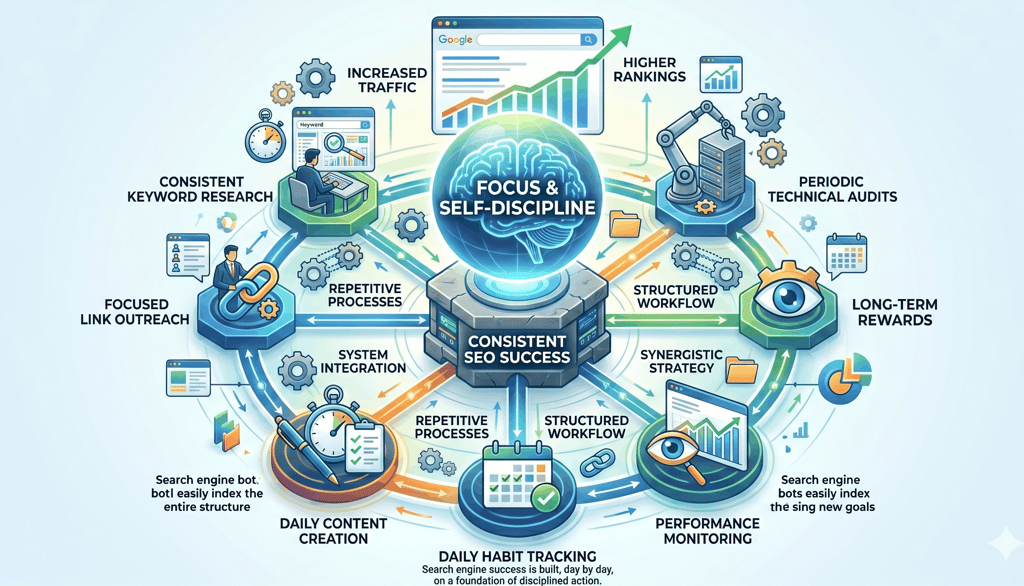
Tracking SEO Progress with Discipline
One of the most common questions I hear from business owners is:
"How do I know if my SEO is actually working?"
It's a fair question.
After all, SEO often feels like planting seeds without immediately seeing the harvest.
You write content, optimize pages, build internal links, improve user experience, and then...wait.
Sometimes the results come quickly. More often, they take time.
Over my 12+ years in digital marketing and hotel marketing, I've noticed something interesting. Businesses that achieve long-term SEO success aren't necessarily the ones with the biggest budgets or the fanciest tools.
They're the ones that track SEO progress with discipline.
They measure what matters.
They review performance regularly.
They avoid emotional decisions.
And most importantly, they stay consistent even when results aren't immediately visible.
Growing up in Coastal Karnataka, I learned early that meaningful growth takes patience. Whether it's watching coconut trees mature, caring for a paddy field during monsoon season, or helping a family business grow, progress is often gradual before it becomes obvious.
SEO works the same way.
In this article, I'll share practical ways to track SEO progress with discipline, avoid common mistakes, and build a healthier long-term mindset toward search engine optimization.
Why Tracking SEO Progress Matters More Than Rankings Alone
When people think about SEO measurement, rankings are usually the first thing that comes to mind.
But rankings tell only part of the story.
A keyword moving from position 15 to position 8 is useful information, but it doesn't reveal the complete picture.
The Problem with Obsessing Over Rankings
Google's search results are dynamic.
Rankings can fluctuate due to:
Personalization
Location
Device type
Competitor activity
Algorithm updates
Checking rankings daily often creates unnecessary stress.
I've seen business owners panic because a keyword dropped three positions on Tuesday, only to recover by Friday.
Focus on Meaningful Progress
Instead of tracking only rankings, monitor:
Organic traffic
Click-through rates (CTR)
Impressions
Engagement metrics
Leads and enquiries
Revenue generated from organic search
According to Google Search Console documentation, impressions, clicks, CTR, and average position together provide a much more complete picture of search performance than rankings alone.
The goal isn't just visibility. The goal is business growth.
The Discipline Mindset: Think Like a Farmer, Not a Gambler
One lesson I always carry from life in Coastal Karnataka is the importance of patience.
Farmers don't dig up seeds every morning to check whether they're growing.
They trust the process.
They focus on daily actions.
SEO requires the same mindset.
The Farmer Approach
A disciplined SEO professional focuses on:
Consistent content creation
Regular optimization
Ongoing learning
Periodic reviews
Long-term improvement
The Gambler Approach
An undisciplined marketer often:
Checks rankings every hour
Changes strategies too frequently
Chases every SEO trend
Abandons content too quickly
One approach builds momentum.
The other creates confusion.
What Experience Has Taught Me
Many successful hotel marketing campaigns I've managed showed little visible progress during the first few months.
Then suddenly, traffic started climbing.
The work wasn't suddenly effective.
The results simply took time to appear.
[Image Suggestion: A farmer inspecting a healthy field at sunrise, symbolizing patience and long-term SEO growth.]
The SEO Metrics You Should Track Consistently
Tracking SEO progress with discipline starts with measuring the right things.
1. Organic Traffic
Organic traffic shows how many users arrive from search engines.
Monitor:
Monthly growth
Seasonal patterns
Landing page performance
Tools:
Google Analytics 4
Google Search Console
2. Keyword Visibility
Track important keywords, but avoid obsessing over daily changes.
Focus on:
Trend direction
New keyword rankings
Top-performing pages
3. Click-Through Rate (CTR)
A page ranking well but receiving few clicks may need:
Better title tags
Improved meta descriptions
More compelling search snippets
4. Engagement Metrics
Look at:
Average engagement time
Scroll depth
Pages per session
These indicators help reveal whether visitors actually find value in your content.
5. Conversions
This is the most important metric.
Track:
Phone calls
Hotel bookings
Contact forms
Enquiries
Sales
Traffic without conversions is only half the story.
A Simple SEO Tracking Dashboard
MetricReview FrequencyOrganic TrafficWeeklyKeyword RankingsWeeklyCTRMonthlyConversionsWeeklyContent PerformanceMonthlyTechnical SEO HealthMonthly
A simple system is usually more sustainable than a complicated one.
Creating a Disciplined SEO Review Routine
One of the biggest mistakes I see is inconsistent reporting.
People check SEO when they feel worried.
That's not a strategy.
That's a reaction.
Weekly Review
Spend 20–30 minutes reviewing:
Traffic trends
Ranking changes
New leads
Technical issues
Monthly Review
Take a deeper look at:
Top-performing pages
Underperforming content
Internal linking opportunities
New content ideas
Quarterly Review
Review broader goals:
Content strategy
Competitor performance
Topic coverage
Business outcomes
Keep Notes
One habit I personally recommend is maintaining a simple SEO journal.
Record:
Major changes
Content published
Algorithm updates
Key observations
This creates valuable historical context.
Why Emotional SEO Decisions Hurt Growth
SEO can sometimes feel emotional.
You invest time, energy, and resources into your website.
Naturally, you want results.
But emotional decision-making often creates problems.
Common Emotional Reactions
Panic After a Ranking Drop
Small fluctuations are normal.
Avoid overreacting.
Giving Up Too Early
Many websites stop publishing content just before momentum begins building.
Constantly Changing Strategies
Every strategy needs time to work.
Frequent changes often reset progress.
What Research Says About Consistency
Research published in the European Journal of Social Psychology found that habits are formed through repeated behaviours over time rather than sudden bursts of effort.
While SEO is different from personal habit formation, the principle is similar.
Consistency tends to outperform intensity.
[Image Suggestion: A person reviewing SEO analytics calmly with a notebook and coffee, focusing on long-term trends rather than daily fluctuations.]
Tracking SEO Progress Like a Healthy Lifestyle
I've often compared SEO to health because the similarities are striking.
You Don't Measure Health by One Day
Nobody becomes fit because they walked 10,000 steps once.
Similarly:
One blog won't build authority.
One backlink won't transform rankings.
One optimization won't double traffic.
Progress comes from repetition.
The WHO Perspective
According to the World Health Organization, maintaining health requires regular habits such as physical activity, balanced nutrition, and long-term consistency.
SEO follows a similar pattern.
The websites that grow steadily often outperform those that rely on occasional bursts of activity.
Sustainable Systems Win
In my own work, I focus on building systems:
Content calendars
Review schedules
Tracking dashboards
Update routines
Systems reduce stress and improve consistency.
Lessons from Coastal Karnataka on Measuring Growth
One thing I appreciate about life in Coastal Karnataka is that nature constantly teaches patience.
During monsoon season, rivers gradually fill.
The landscape slowly transforms.
Growth happens day by day.
Not minute by minute.
The Coconut Tree Lesson
A coconut tree doesn't reveal progress every morning.
But over months and years, the growth becomes undeniable.
SEO is similar.
You may not notice dramatic changes daily.
Yet disciplined tracking reveals meaningful progress over time.
Family Businesses Understand This
Many successful family-run businesses across Udupi, Kundapura, and Byndoor didn't grow through shortcuts.
They grew through:
Consistent service
Trust
Reputation
Long-term relationships
SEO success follows the same principles.
Building a Long-Term SEO Scorecard
Instead of asking:
"Did my rankings increase today?"
Ask:
"Am I stronger than I was three months ago?"
Questions Worth Tracking
Is organic traffic growing?
Are more keywords ranking?
Are users spending more time on site?
Are enquiries increasing?
Is content quality improving?
Is authority growing?
These questions encourage strategic thinking.
A Better Definition of SEO Success
SEO success is not:
One viral article
One ranking spike
One successful month
SEO success is sustained visibility, trust, and growth over time.
That's what disciplined tracking helps you achieve.
Conclusion
Tracking SEO progress with discipline is one of the most valuable habits any business owner can develop.
The truth is that SEO rewards patience more than perfection.
Over the years, I've learned that the businesses that succeed aren't always the most aggressive. They're usually the most consistent. They track meaningful metrics, review performance regularly, and stay focused on long-term improvement rather than short-term fluctuations.
Whether you're running a hotel, managing a local business, or building a personal brand, disciplined SEO tracking helps you make better decisions and stay motivated during the slower phases of growth.
Just as farmers trust the seasons and families nurture relationships over time, successful SEO requires steady effort and thoughtful measurement.
Track the process.
Trust the journey.
Keep moving forward.
The results often arrive quietly before they become impossible to ignore.
FAQs
1. Why is tracking SEO progress important?
Tracking SEO progress helps you understand what's working, identify opportunities, and make informed decisions based on data rather than assumptions.
2. How often should I review SEO performance?
A weekly review of key metrics and a more detailed monthly analysis is usually sufficient for most businesses.
3. What is the most important SEO metric?
Conversions are often the most important metric because they directly connect SEO efforts to business results.
4. Should I check keyword rankings every day?
Generally, no. Daily fluctuations are common. Weekly or monthly trend analysis is more useful.
5. Which tools are best for tracking SEO progress?
Google Analytics 4 and Google Search Console remain two of the most valuable free tools for monitoring SEO performance.
6. How long does it take to see SEO results?
Timelines vary, but meaningful improvements often take several months depending on competition, website authority, and content quality.
7. What mistakes should I avoid when tracking SEO?
Avoid focusing only on rankings, reacting emotionally to short-term fluctuations, and changing strategies too frequently.
8. Can small businesses benefit from disciplined SEO tracking?
Absolutely. Consistent tracking helps small businesses identify growth opportunities and compete more effectively in organic search.
click here to know about Goal Setting for Freelance Marketers in IndiaYour blog post
Anudeep Hegde
Seasoned Internet Marketing Specialist and Hotel Marketing Expert with over 14+ years of experience helping brands grow and succeed online.
Get in touch
connect@anudeephegde.com
Bangalore & Kundapura, India
© 2026. All rights reserved. @Trip Nirvigna Marketing
+91 9449507266, +91 9731258717