Why Most Motivation Fails—And What Works Better
Discover why most motivation fails and learn sustainable habits, systems, and mindset shifts that create lasting success in work, health, and life.
Anudeep Hegde
5/25/20267 min read
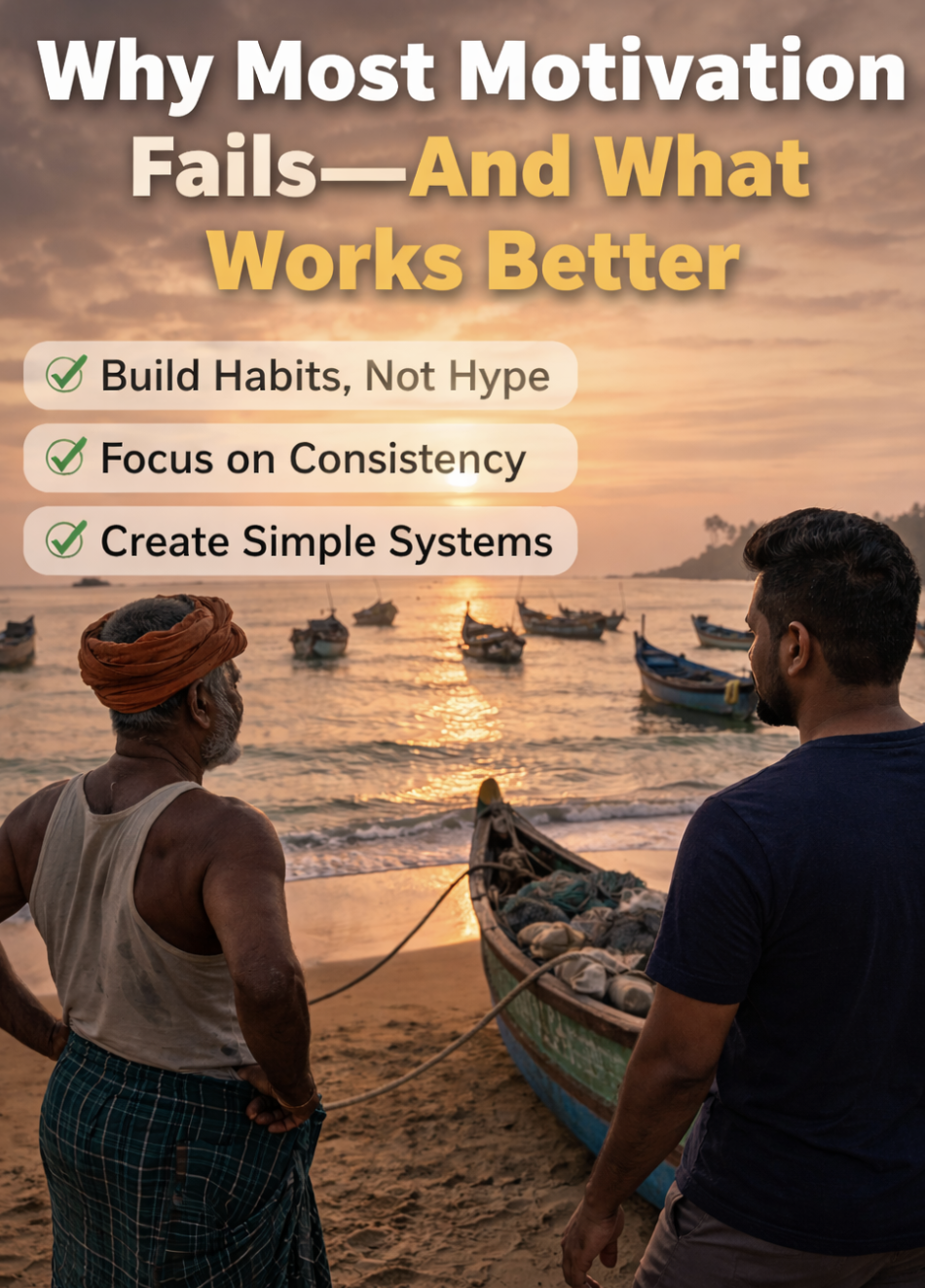
Why Most Motivation Fails—And What Works Better
A few years ago, I noticed a pattern in my own life.
Every January, people around me would make ambitious plans. Some wanted to get fit. Others wanted to start a business, learn digital marketing, wake up earlier, or spend more time with family. Social media was full of motivational quotes, productivity videos, and promises of transformation.
By February, many had quietly returned to old routines.
I wasn't judging them because I had done the same thing myself.
Like many people, I used to believe motivation was the key to success. If I felt motivated, I worked hard. If I felt inspired, I exercised. If I felt energetic, I tackled difficult projects.
The problem?
Motivation comes and goes.
One day you're ready to conquer the world. The next day you're tired, distracted, stressed, or simply not in the mood.
After more than 12 years in digital marketing, working with hotels, businesses, entrepreneurs, and teams across different industries, I've learned something important:
The people who achieve long-term success are rarely the most motivated. They are usually the most consistent.
This article explores why most motivation fails and what to do instead. More importantly, I'll share practical strategies that have helped me stay productive, healthy, and focused without depending on motivation alone.
If you've ever struggled with consistency, procrastination, fitness goals, business growth, or personal development, this may completely change how you think about success.
The Big Problem: Motivation Is Temporary
Motivation feels powerful because it creates emotional energy.
You watch an inspiring video.
You attend a seminar.
You read a great book.
You listen to a successful entrepreneur.
Suddenly everything feels possible.
The challenge is that emotions naturally fluctuate.
What Science Says About Motivation
According to research published by psychologists studying self-regulation and behaviour change, relying purely on motivation often produces inconsistent results because motivation varies depending on mood, environment, stress levels, sleep quality, and daily circumstances.
Researchers from the field of behavioural science have consistently found that habits and environmental cues often predict behaviour more reliably than momentary motivation.
In simple words:
People don't succeed because they stay motivated forever. They succeed because they continue acting even when motivation disappears.
A Simple Coastal Karnataka Example
Growing up around Coastal Karnataka, I watched farmers, fishermen, shopkeepers, teachers, and small business owners work steadily regardless of how they felt that day.
A fisherman cannot wait for motivation before preparing his boat.
A farmer cannot skip essential work because he doesn't feel inspired.
Daily responsibilities demand consistency.
Nature itself teaches this lesson.
The tides arrive.
The seasons change.
The monsoon comes.
Not because they're motivated—but because they're following a system.
Human success works much the same way.
[Image Suggestion: Early morning fishing boats along the Karnataka coast, symbolizing consistency and daily discipline.]
Why Motivation Fails Most People
If motivation is helpful, why does it fail so often?
The answer lies in several common misunderstandings.
We Overestimate Future Energy
When setting goals, people imagine their future selves will always be energetic, disciplined, and enthusiastic.
Reality looks different.
There will be:
Busy workdays
Family responsibilities
Illness
Travel
Stress
Unexpected challenges
A plan that only works when you're highly motivated isn't a sustainable plan.
We Chase Feelings Instead of Systems
Many people ask:
"How can I stay motivated?"
A better question is:
"How can I make progress even when I'm not motivated?"
That's where systems become powerful.
Social Media Creates Unrealistic Expectations
Today's motivational content often promotes dramatic transformation.
Lose weight fast.
Build a business quickly.
Become successful overnight.
Yet real growth is usually slower.
Most meaningful achievements happen through hundreds of small actions repeated consistently over time.
This isn't exciting content for social media.
But it's how real progress happens.
Motivation Doesn't Solve Friction
Even motivated people struggle when systems are poorly designed.
For example:
A complicated fitness plan
An unrealistic work schedule
Excessive distractions
Lack of preparation
Motivation cannot permanently overcome bad systems.
Good systems reduce the need for motivation.
What Works Better Than Motivation? Build Systems
One lesson has transformed my work and personal life more than any motivational speech.
Create systems instead of chasing inspiration.
What Is a System?
A system is a repeatable process that makes desired actions easier.
Examples:
GoalMotivation ApproachSystem ApproachExerciseWork out when inspiredWalk every morning at 6 AMReadingRead when motivatedRead 10 pages before bedContent CreationWrite when creativeWrite daily from 8–9 AMHealthy EatingEat healthy when focusedPrepare meals in advanceBusiness GrowthWork harder occasionallySchedule weekly growth activities
The goal becomes automatic action rather than emotional decision-making.
My Personal Productivity System
Running multiple client projects taught me that relying on motivation creates inconsistency.
Instead, I follow simple systems:
Fixed planning sessions
Daily priority lists
Time-blocked work periods
Weekly reviews
Scheduled exercise
Regular family time
Some days motivation is high.
Some days it isn't.
The system keeps moving regardless.
Consistency beats intensity.
[Image Suggestion: Organized desk with planner, laptop, calendar, and checklist representing structured systems.]
Focus on Habits, Not Grand Goals
Goals are useful.
Habits are transformational.
The Difference Matters
Goals define direction.
Habits determine outcomes.
For example:
Goal:
Run a marathon
Habit:
Run three times every week
Goal:
Improve health
Habit:
Walk for 30 minutes daily
Goal:
Grow a business
Habit:
Contact five prospects every weekday
What Research Shows
According to behavioural psychology research, repeated behaviours eventually become more automatic through habit formation, reducing reliance on conscious effort and motivation.
The exact time varies significantly between individuals and behaviours, but the principle remains clear:
Repeated action becomes easier over time.
Start Smaller Than You Think
One mistake people make is starting too aggressively.
Examples:
Bad approach:
Exercise two hours daily
Better approach:
Walk ten minutes daily
Bad approach:
Read fifty pages every night
Better approach:
Read five pages nightly
Small habits may seem insignificant.
But consistency creates momentum.
And momentum creates transformation.
Environment Often Beats Willpower
This may surprise you.
Many successful people don't necessarily possess extraordinary willpower.
They simply design environments that support good behaviour.
Remove Friction
Want to exercise?
Keep walking shoes visible.
Want to read more?
Keep books near your bed.
Want fewer distractions?
Turn off unnecessary notifications.
Want healthier eating habits?
Keep healthy food accessible.
The Coastal Karnataka Advantage
One thing I appreciate about life in Coastal Karnataka is access to natural environments.
Whether it's:
Beach walks
Village roads
Coconut groves
Riverbanks
Open spaces
Nature encourages movement and reflection.
Research consistently links time in natural environments with reduced stress and improved mental wellbeing.
Sometimes improving focus isn't about working harder.
Sometimes it's about stepping outside.
Create a Success-Friendly Environment
Ask yourself:
What behaviours am I making easier?
What distractions am I making harder?
Does my environment support my goals?
Small changes can produce surprisingly large results.
Sustainable Success Requires Health and Relationships
Many people pursue achievement while neglecting wellbeing.
Eventually, the cost becomes visible.
Sleep Is a Performance Tool
According to the U.S. Centers for Disease Control and Prevention (CDC), adults generally need at least seven hours of sleep per night for optimal health.
Sleep influences:
Decision-making
Memory
Focus
Emotional resilience
Productivity
Yet sleep is often sacrificed first.
Physical Activity Supports Mental Performance
The World Health Organization recommends regular physical activity for adults because it supports physical and mental health.
Movement improves:
Energy
Mood
Concentration
Stress management
You don't need extreme workouts.
Simple activities help:
Walking
Cycling
Yoga
Swimming
Sports
Don't Ignore Family
One lesson I've learned over the years is that professional success feels far more meaningful when shared with loved ones.
In Karnataka, family gatherings remain an important part of life.
Festivals, celebrations, community events, and simple meals together create emotional balance.
When work becomes the only focus, motivation often declines because life loses perspective.
Strong relationships provide something motivation cannot:
Meaning.
[Image Suggestion: Family enjoying an evening walk near a coastal sunset in Karnataka.]
Replace Motivation With Identity
Perhaps the most powerful mindset shift is this:
Stop focusing on what you want to achieve.
Start focusing on who you want to become.
Examples
Instead of saying:
"I want to write a book."
Say:
"I am a writer who writes regularly."
Instead of:
"I want to get fit."
Say:
"I am someone who prioritizes health."
Instead of:
"I want a successful business."
Say:
"I am a professional who creates value consistently."
Why Identity Matters
Behaviour tends to align with self-image.
When actions reinforce identity, consistency becomes easier.
You aren't forcing yourself to act.
You're simply behaving in a way that matches who you believe you are.
Daily Identity Questions
Ask yourself:
What would a disciplined person do today?
What would a healthy person choose right now?
What would a reliable professional focus on?
Small decisions gradually shape identity.
Identity gradually shapes destiny.
Practical Alternatives to Motivation You Can Use Today
If motivation keeps fading, try these practical alternatives.
The Consistency Checklist
✓ Create simple daily habits
✓ Reduce distractions
✓ Schedule important work
✓ Track progress weekly
✓ Prioritize sleep
✓ Exercise regularly
✓ Focus on systems instead of feelings
✓ Make good behaviours easier
✓ Build supportive environments
✓ Protect family relationships
The Two-Minute Rule
If something takes less than two minutes, start immediately.
Examples:
Open the document
Read one page
Put on walking shoes
Write one paragraph
Starting often creates momentum.
The "Never Miss Twice" Rule
Everyone misses workouts.
Everyone skips habits occasionally.
The danger is missing repeatedly.
If you miss once:
Resume immediately.
Perfection isn't required.
Consistency is.
Conclusion
The reason most motivation fails is simple: motivation was never designed to carry us through every challenge, distraction, setback, and difficult day.
Motivation can start the journey.
But systems, habits, environment, health, and identity are what sustain it.
Over the years, I've learned that successful people aren't constantly inspired. They're simply committed to showing up, even when enthusiasm fades.
Whether you're building a business, improving your health, growing your career, strengthening relationships, or pursuing personal goals, don't ask yourself how to stay motivated forever.
Ask yourself how to create a life that makes positive action easier.
In many ways, nature here in Coastal Karnataka reminds me of this truth every day. The waves keep arriving. The seasons continue changing. Progress happens steadily, not dramatically.
And perhaps that's the real secret to lasting success:
Small actions. Repeated consistently. Over a long period of time.
That's what works when motivation doesn't.
FAQs
1. Why does motivation disappear so quickly?
Motivation is influenced by emotions, energy levels, stress, sleep quality, and environment. Because these factors change daily, motivation naturally fluctuates.
2. What is better than motivation?
Systems, habits, routines, and supportive environments are often more reliable than motivation because they reduce the need for constant emotional energy.
3. Can habits replace motivation completely?
Not completely, but strong habits significantly reduce dependence on motivation by making desired behaviours more automatic.
4. How can I stay consistent when I don't feel motivated?
Focus on small actions, maintain routines, reduce distractions, and commit to showing up even when enthusiasm is low.
5. Why do New Year's resolutions often fail?
Many resolutions rely on temporary motivation rather than sustainable systems, realistic habits, and long-term behavioural change.
.
click here to know about Measuring ROI on Social Media Efforts
Anudeep Hegde
Seasoned Internet Marketing Specialist and Hotel Marketing Expert with over 14+ years of experience helping brands grow and succeed online.
Get in touch
connect@anudeephegde.com
Bangalore & Kundapura, India
© 2026. All rights reserved. @Trip Nirvigna Marketing
+91 9449507266, +91 9731258717