Discipline in Data Analysis for Sustainable Growth
Learn how discipline in data analysis helps businesses turn numbers into growth. Practical insights, analytics tips, and decision-making strategies.
Anudeep Hegde
5/26/20267 min read
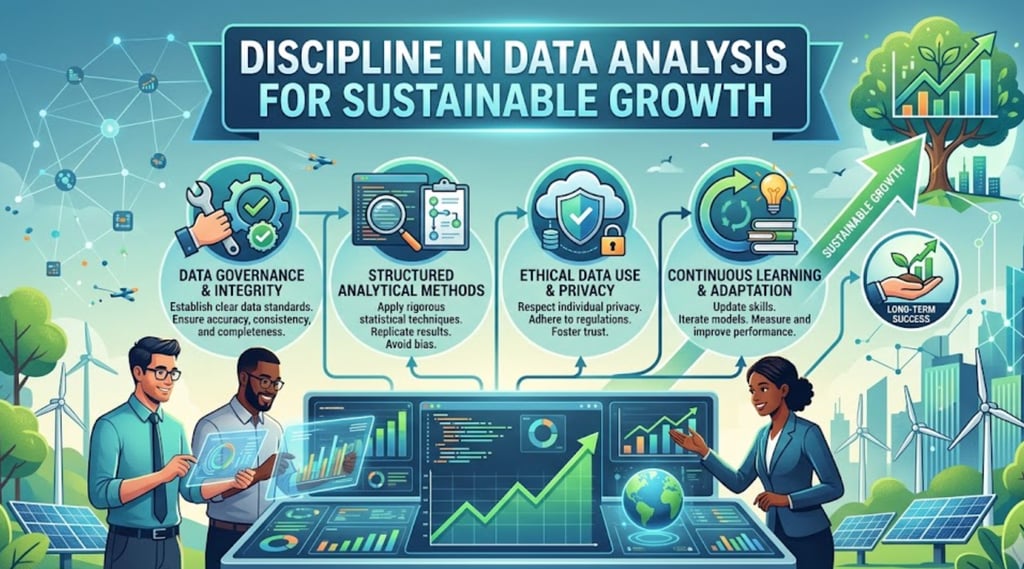
Discipline in Data Analysis for Sustainable Growth
A few years ago, I was reviewing the performance reports of a hotel client. The management team was worried because website traffic had increased significantly over several months, yet room bookings hadn't grown at the same pace.
At first glance, the numbers seemed encouraging. More visitors usually mean more opportunities, right?
But when we looked deeper into the data, a different story emerged.
Most of the new visitors were landing on informational pages, spending only a few seconds on the website, and leaving without exploring booking options. The issue wasn't traffic. The issue was visitor intent and website experience.
That simple insight changed the client's marketing strategy.
Within months, improvements in landing pages, booking flow, and content targeting produced far better business outcomes than simply chasing more website visitors.
This experience reinforced a lesson I've learned repeatedly over my 12+ years in digital marketing and hotel marketing:
Data alone doesn't create growth. Discipline in data analysis does.
Today, businesses generate more data than ever before. Websites, social media platforms, advertising campaigns, customer reviews, CRM systems, booking engines, and mobile apps continuously produce information.
According to the International Data Corporation (IDC), the amount of global data created and consumed continues to grow rapidly year after year, reaching hundreds of zettabytes globally during this decade.
Yet despite having access to unprecedented amounts of information, many businesses still struggle to make better decisions.
Why?
Because collecting data is easy.
Interpreting it correctly requires discipline.
In this article, I'll share practical insights into discipline in data analysis, how businesses can transform raw numbers into meaningful growth, and why careful interpretation often matters more than sophisticated tools.
Why Discipline Matters More Than Data
Many people assume successful businesses win because they have more data.
In reality, success often comes from asking better questions.
The Problem with Data Overload
Modern businesses face an abundance of information:
Website analytics
Advertising reports
Customer surveys
Social media metrics
Sales dashboards
Search engine rankings
Booking statistics
The challenge isn't finding data.
The challenge is identifying what truly matters.
More Numbers Do Not Equal Better Decisions
I've seen businesses spend hours tracking dozens of metrics while ignoring the few indicators that actually influence growth.
Examples include:
Obsessing over social media likes instead of inquiries
Celebrating website traffic without measuring conversions
Tracking impressions instead of revenue
Focusing on rankings without analyzing business outcomes
Disciplined analysis means filtering noise and focusing on meaningful indicators.
A Lesson from Coastal Karnataka
Growing up around Coastal Karnataka, I often observed fishermen preparing for the day.
Experienced fishermen didn't look at every wave.
They paid attention to specific signs:
Wind direction
Tides
Weather conditions
Seasonal patterns
They focused on information that influenced outcomes.
Data analysis works the same way.
Not every number deserves equal attention.
[Image Suggestion: Marketing professional reviewing dashboards while comparing key performance metrics on a laptop.]
Start with Questions, Not Reports
One of the biggest mistakes businesses make is opening analytics dashboards without a clear objective.
Before reviewing data, ask:
What Problem Are We Trying to Solve?
Examples include:
Why are bookings declining?
Why are leads not converting?
Which marketing channel generates the highest ROI?
Why are visitors leaving the website?
Which customer segments produce the most revenue?
Questions create focus.
Focus creates insight.
The Discipline Framework I Use
Whenever I analyze marketing performance, I follow a simple sequence:
Define the business objective
Identify relevant metrics
Analyze trends
Investigate anomalies
Form hypotheses
Test solutions
Measure outcomes
This prevents random analysis and keeps attention aligned with business goals.
Avoid "Dashboard Tourism"
Many professionals jump between charts and reports without a purpose.
I call this dashboard tourism.
You're looking at data.
But you're not learning anything useful.
Always begin with a business question.
The numbers should help answer it.
Focus on Metrics That Drive Growth
Not all metrics are equally valuable.
Some indicators provide real business insights.
Others simply look impressive.
Vanity Metrics vs Growth Metrics
Vanity MetricsGrowth MetricsPage ViewsConversion RateFollowersQualified LeadsImpressionsRevenueLikesCustomer RetentionClicksBooking ValueReachCustomer Lifetime Value
Examples from Hotel Marketing
In hotel marketing, many property owners celebrate increased website traffic.
Traffic matters.
But what matters more includes:
Booking conversion rate
Average booking value
Revenue per visitor
Direct booking growth
Repeat guest rate
A smaller number of highly qualified visitors often creates more business value than a large volume of irrelevant traffic.
Key Takeaway
Measure outcomes, not activity.
Growth comes from results, not reports.
Build Consistency into Your Analysis Process
Discipline in data analysis isn't about occasional reviews.
It's about creating regular habits.
Weekly Analysis Routine
I recommend reviewing:
Traffic Trends
Organic traffic
Paid traffic
Referral traffic
Direct traffic
User Behaviour
Time on site
Engagement metrics
Popular content
Exit pages
Conversion Metrics
Leads generated
Bookings completed
Form submissions
Sales performance
Marketing Performance
Campaign effectiveness
Cost per acquisition
Return on investment
Audience behaviour
Monthly Strategic Reviews
Every month, evaluate:
Long-term trends
Seasonal patterns
Revenue performance
Customer feedback
Competitive positioning
Consistency helps identify meaningful patterns.
One isolated number rarely tells the whole story.
Why Trends Matter More Than Snapshots
A single day's performance can be misleading.
A month's trend reveals direction.
This is particularly important in industries affected by seasonality, including hospitality and tourism.
Businesses in Coastal Karnataka understand this well.
Visitor demand naturally fluctuates throughout the year due to weather, holidays, festivals, and travel patterns.
Looking only at short-term data can create unnecessary panic.
Looking at trends creates perspective.
[Image Suggestion: Analyst examining trend charts with monthly performance reports and business KPIs.]
Learn to Recognize Data Bias and Misinterpretation
One of the most important skills in analytics is skepticism.
Not distrust.
Healthy skepticism.
Correlation Is Not Causation
Two events occurring together do not necessarily mean one caused the other.
Example:
A website redesign launches during peak tourist season.
Bookings increase.
Was it the redesign?
The season?
Both?
Without proper analysis, conclusions can be misleading.
Confirmation Bias
Humans naturally search for evidence supporting existing beliefs.
Businesses do this too.
If we believe a campaign is successful, we may focus on positive metrics while ignoring warning signs.
Disciplined analysts challenge their own assumptions.
Ask Better Questions
Instead of:
"How can I prove this campaign worked?"
Ask:
"What evidence supports or contradicts this conclusion?"
This mindset improves decision-making quality dramatically.
Use Data to Support Human Judgment
One misconception about analytics is that numbers make decisions for us.
They don't.
People do.
Data Provides Context
Data helps answer:
What happened?
When did it happen?
How often did it happen?
Human judgment helps answer:
Why did it happen?
What should we do next?
The Importance of Customer Understanding
A hotel guest review often contains insights no dashboard can fully capture.
Customer conversations reveal:
Frustrations
Expectations
Motivations
Preferences
Combining quantitative data with qualitative understanding produces stronger decisions.
The Human Side of Growth
I've found some of the best business insights come from simple conversations.
Talking to guests.
Listening to customers.
Understanding concerns.
Observing behaviour.
Numbers matter.
People matter more.
The most successful businesses learn from both.
Creating a Data-Driven Growth Culture
Analytics shouldn't belong only to marketers or analysts.
It should become part of organizational thinking.
Encourage Curiosity
Teams should feel comfortable asking:
Why did this happen?
What changed?
What can we improve?
What should we test next?
Curiosity drives learning.
Learning drives growth.
Promote Transparency
Share key performance indicators with relevant stakeholders.
When teams understand business objectives and performance trends, alignment improves.
Make Decisions Based on Evidence
Opinions are valuable.
Experience is valuable.
But evidence should guide important decisions whenever possible.
Continuous Improvement Mindset
Every analysis should lead to action.
Examples:
Improve website usability
Refine marketing campaigns
Enhance customer experience
Optimize booking journeys
Adjust content strategy
The purpose of analysis isn't reporting.
The purpose is improvement.
[Image Suggestion: Team collaborating around a dashboard discussing insights and business growth strategies.]
Practical Data Analysis Habits Every Professional Should Develop
Whether you're a marketer, entrepreneur, hotel manager, freelancer, or business owner, these habits can improve decision-making.
Daily Habits
✓ Monitor key business indicators
✓ Review major performance changes
✓ Record observations
Weekly Habits
✓ Analyze trends
✓ Identify opportunities
✓ Review campaign effectiveness
✓ Check customer feedback
Monthly Habits
✓ Evaluate strategic goals
✓ Measure business outcomes
✓ Test new ideas
✓ Review assumptions
Questions Worth Asking Regularly
What is improving?
What is declining?
Why is it happening?
What should we test next?
How does this impact customers?
Small analytical habits often produce significant long-term advantages.
Turning Numbers into Sustainable Growth
The ultimate goal of discipline in data analysis is not creating better reports.
It's creating better outcomes.
Growth happens when insights lead to action.
A Sustainable Growth Mindset
Many businesses chase short-term wins.
Sustainable growth requires patience.
The same principle applies in nature.
The coconut trees lining Coastal Karnataka's shoreline don't grow overnight.
Growth happens gradually.
Consistently.
Steadily.
Business growth follows similar patterns.
Small improvements accumulate.
Better decisions compound.
Consistent learning creates momentum.
The Real Value of Analytics
Analytics helps organizations:
Reduce uncertainty
Improve efficiency
Understand customers
Optimize marketing
Increase profitability
Make smarter decisions
But only when discipline guides interpretation.
The most valuable number is not the biggest number.
It's the number that helps you make a better decision.
Conclusion
Discipline in data analysis is ultimately about developing a habit of thoughtful observation.
In a world overflowing with information, the ability to focus on meaningful signals has become a competitive advantage.
Throughout my journey in digital marketing and hotel marketing, I've learned that successful businesses rarely win because they have more data. They win because they ask better questions, analyze information consistently, challenge assumptions, and take action based on evidence.
Whether you're managing a hotel, running a business, leading a marketing campaign, or building a personal brand, remember this:
Numbers don't create growth. Understanding creates growth.
When combined with curiosity, consistency, and sound judgment, data becomes far more than statistics on a dashboard.
It becomes a roadmap for sustainable success.
And just like the steady rhythms of life in Coastal Karnataka, meaningful growth often comes not from dramatic breakthroughs but from disciplined attention to small improvements over time.
FAQs
1. What is discipline in data analysis?
Discipline in data analysis refers to the consistent, structured, and objective process of collecting, interpreting, reviewing, and applying data to improve decision-making and business outcomes.
2. Why is data analysis important for business growth?
Data analysis helps businesses understand customer behaviour, optimize marketing efforts, improve operations, identify opportunities, and make evidence-based decisions that support growth.
3. What are vanity metrics?
Vanity metrics are measurements that may look impressive but provide little insight into actual business performance, such as likes, impressions, or raw traffic without conversion analysis.
4. How often should businesses review analytics data?
Key performance metrics should be monitored regularly, with weekly operational reviews and monthly strategic evaluations providing a balanced approach.
5. What is the difference between data and insights?
Data consists of raw information, while insights are meaningful conclusions derived from analyzing that information and understanding its implications.
6. Can small businesses benefit from data analysis?
Absolutely. Even simple metrics related to customers, sales, website performance, and marketing effectiveness can help small businesses make better decisions.
7. What is confirmation bias in analytics?
Confirmation bias occurs when people focus only on information supporting their existing beliefs while ignoring evidence that may challenge their assumptions.
8. What is the most important metric to track?
The most important metric depends on business objectives, but metrics directly connected to revenue, customer satisfaction, retention, and conversions typically provide the most valuable insights.
.
click here to know about Paid Ads vs Organic: When to Use What
Anudeep Hegde
Seasoned Internet Marketing Specialist and Hotel Marketing Expert with over 14+ years of experience helping brands grow and succeed online.
Get in touch
connect@anudeephegde.com
Bangalore & Kundapura, India
© 2026. All rights reserved. @Trip Nirvigna Marketing
+91 9449507266, +91 9731258717