Emotional Control in Negotiations That Win Trust
Learn how emotional control in negotiations helps you make better decisions, build trust, reduce conflict, and achieve stronger outcomes.
Anudeep hegde
6/25/20266 min read
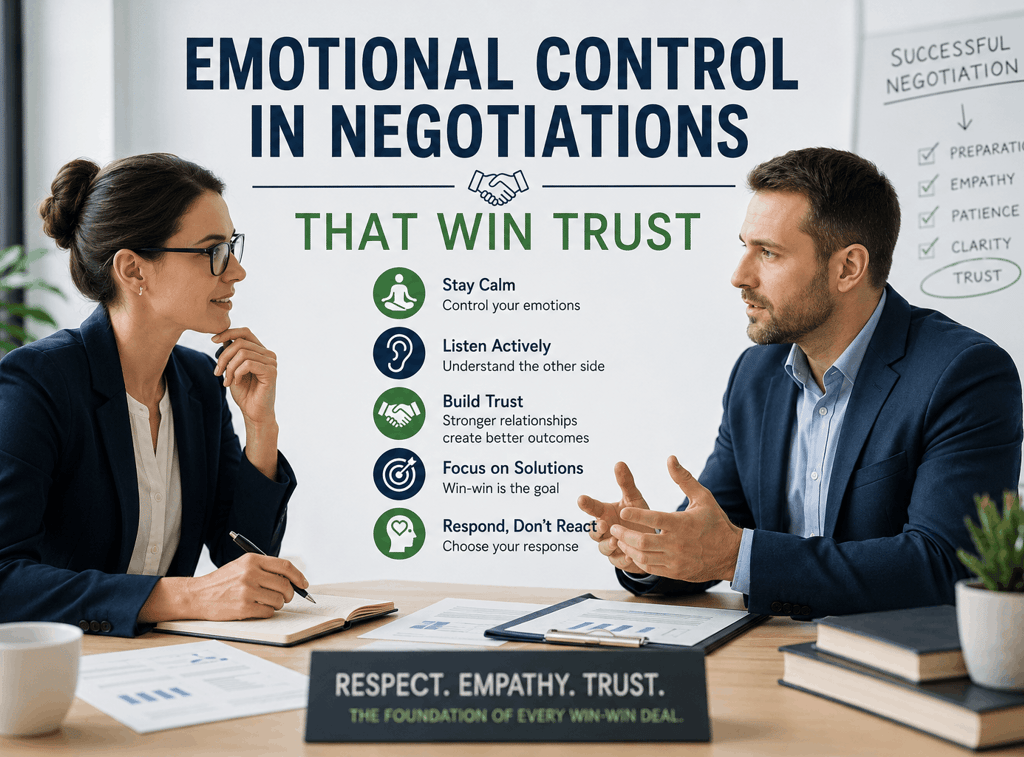
Emotional Control in Negotiations That Win Trust
Most people think successful negotiations are about speaking confidently, presenting strong arguments, or getting the best deal.
In my experience, they're often about something much simpler—and much harder.
Emotional control in negotiations.
Over the years, whether I was discussing hotel marketing budgets, negotiating digital marketing contracts, handling client expectations, or even resolving family matters, I've noticed one common pattern. The person who manages emotions well usually makes better decisions.
The person who reacts emotionally often regrets it later.
Growing up in Coastal Karnataka, I learned this lesson early. In our communities, relationships matter. People remember how you made them feel long after they forget the details of an agreement. Whether it's discussing land matters, family decisions, business partnerships, or vendor agreements, emotional intelligence often determines the outcome more than logic alone.
The reality is that negotiation isn't just a business skill. It's a life skill.
We negotiate with clients, colleagues, suppliers, spouses, children, and even ourselves.
In this article, I'll share practical strategies for developing emotional control in negotiations, explain why it matters, discuss what science says about emotional decision-making, and offer actionable techniques you can use immediately.
Why Emotional Control Matters More Than You Think
Many negotiations fail not because of poor proposals but because emotions take over.
A comment feels disrespectful.
A demand seems unreasonable.
An offer feels insulting.
Suddenly, the discussion shifts from solving a problem to defending an ego.
According to research by psychologist Daniel Kahneman, winner of the Nobel Prize in Economic Sciences, people often make decisions influenced by emotional and cognitive biases rather than purely rational analysis.
Similarly, research from Harvard's Program on Negotiation highlights that emotions significantly influence negotiation outcomes, affecting trust, communication, and long-term relationships.
The Hidden Cost of Emotional Reactions
When emotions dominate negotiations:
Communication becomes defensive.
Listening decreases.
Assumptions increase.
Creativity drops.
Relationships suffer.
The result?
Even if someone "wins" the negotiation, everyone loses something valuable.
The Coastal Karnataka Lesson
I've often observed local business owners in Udupi, Kundapura, Byndoor, and surrounding areas.
The most respected entrepreneurs aren't always the loudest.
They're usually calm.
They listen carefully.
They respond thoughtfully.
And they rarely allow temporary emotions to damage long-term relationships.
That's emotional control in action.
[Image Suggestion: Two professionals calmly discussing business terms across a table with a relaxed atmosphere.]
Understanding the Science Behind Emotional Control
Before improving emotional control, it helps to understand what happens inside our minds.
The Brain's Emotional Response System
When we perceive a threat—whether physical or social—the brain reacts quickly.
A harsh email.
An aggressive demand.
A personal criticism.
These can trigger stress responses similar to physical threats.
According to research published in Nature Reviews Neuroscience, emotional reactions can temporarily reduce activity in areas of the brain associated with logical reasoning and decision-making.
This explains why people often say things like:
"I shouldn't have said that."
"I reacted too quickly."
"I wish I had waited before responding."
Emotional Control Is Not Emotional Suppression
Many people misunderstand emotional intelligence.
It doesn't mean ignoring feelings.
It means recognizing emotions without allowing them to control your actions.
Think of it like driving during heavy monsoon rains in Coastal Karnataka.
You acknowledge the weather.
You adapt.
But you don't abandon the steering wheel.
Common Emotional Triggers in Negotiations
Understanding triggers is often the first step toward controlling them.
Feeling Disrespected
This is one of the biggest negotiation triggers.
Examples include:
Being interrupted
Receiving a low offer
Being ignored
Feeling undervalued
Fear of Losing
Fear often appears as:
Anxiety
Aggression
Impatience
People sometimes accept poor deals simply because they're afraid of losing an opportunity.
Ego and Pride
This is particularly common among experienced professionals.
The desire to be right can become stronger than the desire to find the best solution.
Time Pressure
Urgency creates emotional stress.
When people feel rushed, they often make impulsive decisions.
Personal Attachment
The more emotionally attached we are to an outcome, the harder it becomes to negotiate objectively.
Key takeaway: Most negotiation mistakes happen when emotions become stronger than awareness.
[Image Suggestion: Calm professional taking notes and listening carefully during a negotiation.]
Practical Techniques for Emotional Control in Negotiations
The good news is that emotional control can be developed like any other skill.
1. Pause Before Responding
One of the most powerful negotiation techniques costs nothing.
Pause.
When faced with a surprising statement:
Take a breath.
Count silently.
Gather your thoughts.
A few seconds can prevent hours of damage.
2. Focus on Facts, Not Interpretations
Instead of thinking:
"They're trying to insult me."
Ask:
"What exactly was said?"
Facts reduce emotional distortion.
Interpretations increase it.
3. Ask Questions Instead of Arguing
Questions create understanding.
Arguments create resistance.
Examples:
"Can you help me understand your perspective?"
"What concerns are driving that request?"
"What would an ideal outcome look like for you?"
Curiosity often diffuses tension.
4. Separate People from Problems
This principle is emphasized in the widely respected negotiation book Getting to Yes by Roger Fisher and William Ury.
The person is not the problem.
The issue is the problem.
When we remember this distinction, discussions become more productive.
5. Slow Down Important Decisions
If emotions are high:
Request time to review.
Schedule a follow-up meeting.
Sleep on major decisions.
I have avoided several costly mistakes simply by waiting 24 hours before responding.
The Role of Emotional Intelligence in Successful Negotiation
Emotional intelligence has become one of the most valuable professional skills.
Psychologist Daniel Goleman, known for popularizing emotional intelligence, identifies self-awareness and self-regulation as critical components of effective leadership.
Self-Awareness
Ask yourself:
What am I feeling?
Why am I feeling it?
Is this emotion helping me?
Self-Regulation
Once aware of emotions, choose a constructive response.
Empathy
Understanding the other person's concerns often reveals solutions neither side initially considered.
Relationship Management
Strong negotiators think beyond today's agreement.
They consider future interactions.
This mindset is especially important in close-knit communities and industries where reputation matters.
In Coastal Karnataka, business often spreads through trust and word-of-mouth recommendations.
Protecting relationships is usually more valuable than winning a single argument.
[Image Suggestion: Business handshake after a respectful discussion with positive body language.]
Emotional Control Lessons From Everyday Life
Negotiation isn't limited to boardrooms.
It's everywhere.
Family Discussions
Parents negotiate with children.
Couples negotiate schedules.
Siblings negotiate responsibilities.
Emotional control often determines whether conversations become productive or stressful.
Workplace Conversations
Negotiation appears in:
Salary discussions
Team projects
Resource allocation
Conflict resolution
Customer Relationships
As someone working in marketing, I've learned that clients don't always remember every report or presentation.
They remember how challenges were handled.
Staying calm during difficult conversations builds credibility.
Community Interactions
Living in Karnataka teaches patience.
Whether dealing with seasonal changes, local issues, or community matters, calm communication often produces better outcomes than emotional reactions.
Mistakes That Destroy Negotiations
Let's look at some common pitfalls.
Reacting Immediately
Quick reactions often create unnecessary conflict.
Taking Everything Personally
Not every disagreement is an attack.
Sometimes it's simply a difference in priorities.
Talking More Than Listening
Listening remains one of the most underrated negotiation skills.
Focusing Only on Price
Whether negotiating a service contract or business agreement, value often matters more than price alone.
Letting Anger Guide Decisions
Anger narrows perspective.
Calmness expands options.
Trying to Win at All Costs
Short-term victories can create long-term losses.
Strong relationships often generate more value than a slightly better deal.
Emotional ReactionBetter AlternativeDefensivenessCuriosityAngerPatienceImpulsivenessReflectionAssumptionClarificationAggressionCollaboration
Building Emotional Control as a Daily Habit
The best negotiators don't suddenly become calm during difficult discussions.
They practice emotional control every day.
Prioritize Sleep
Research from the Centers for Disease Control and Prevention (CDC) highlights the importance of adequate sleep for emotional regulation and decision-making.
When we're exhausted, patience decreases.
Exercise Regularly
Physical activity helps manage stress and improve emotional resilience.
Practice Mindfulness
Even five minutes of focused breathing can improve awareness.
Reduce Unnecessary Stress
Simplify commitments.
Protect your energy.
Not every battle deserves attention.
Reflect Weekly
Ask:
When did I react emotionally?
What triggered me?
How could I respond differently next time?
Small reflections create significant improvements over time.
[Image Suggestion: Person journaling peacefully near a coastal sunrise with a notebook and tea.]
Why Emotional Control Creates Better Outcomes
One of the biggest misconceptions about negotiations is that emotional control makes people weak.
The opposite is true.
Emotional control creates strength.
It allows you to:
Think clearly.
Listen carefully.
Build trust.
Protect relationships.
Make better decisions.
The strongest negotiators aren't those who dominate conversations.
They're the ones who maintain clarity when others lose it.
In a world full of noise, calmness becomes a competitive advantage.
Conclusion
Mastering emotional control in negotiations isn't about becoming emotionless.
It's about becoming intentional.
The goal isn't to suppress feelings but to prevent feelings from making decisions on your behalf.
Throughout my journey working with businesses, hotels, entrepreneurs, and clients across different industries, I've seen that long-term success rarely belongs to the loudest voice in the room.
It belongs to the person who stays calm under pressure, listens carefully, and responds thoughtfully.
Whether you're negotiating a business contract, discussing family decisions, managing workplace conflicts, or simply navigating everyday conversations, emotional control can help you achieve better outcomes while preserving what matters most—trust and relationships.
The next time you find yourself in a difficult negotiation, remember:
Pause. Listen. Understand. Then respond.
Those four steps can change the outcome of almost any conversation.
FAQs
1. What is emotional control in negotiations?
Emotional control in negotiations refers to managing emotions effectively so they support good decision-making rather than creating impulsive reactions.
2. Why is emotional control important during negotiations?
It improves communication, strengthens relationships, reduces conflict, and helps people make more rational decisions.
3. Can emotional intelligence improve negotiation skills?
Yes. Emotional intelligence helps individuals recognize emotions, regulate responses, understand others, and build trust.
4. What are common emotional triggers in negotiations?
Common triggers include feeling disrespected, fear of losing, ego conflicts, time pressure, and personal attachment to outcomes.
5. How can I stay calm during a difficult negotiation?
Pause before responding, focus on facts, ask questions, take breaks when necessary, and avoid making decisions while highly emotional.
6. Does emotional control mean hiding emotions?
No. Emotional control means recognizing emotions and responding thoughtfully rather than reacting impulsively.
7. How does emotional control affect business relationships?
It builds trust, improves communication, and increases the likelihood of successful long-term partnerships.
8. Can emotional control be learned?
Absolutely. Like any skill, emotional control improves through self-awareness, practice, reflection, and consistent effort.
.
Click here to Know about Discipline in Email Marketing: Best Practices
Anudeep Hegde
Seasoned Internet Marketing Specialist and Hotel Marketing Expert with over 12+ years of experience helping brands grow and succeed online.
Get in touch
connect@anudeephegde.com
+91 9449507266, +91 9731258717
© 2026. All rights reserved. @Trip Nirvigna Marketing