Keyword Research Tools Every Indian Marketer Needs
Discover the best keyword research tools every Indian marketer needs to drive traffic, improve SEO rankings, and build successful digital campaigns.
6/12/20266 min read
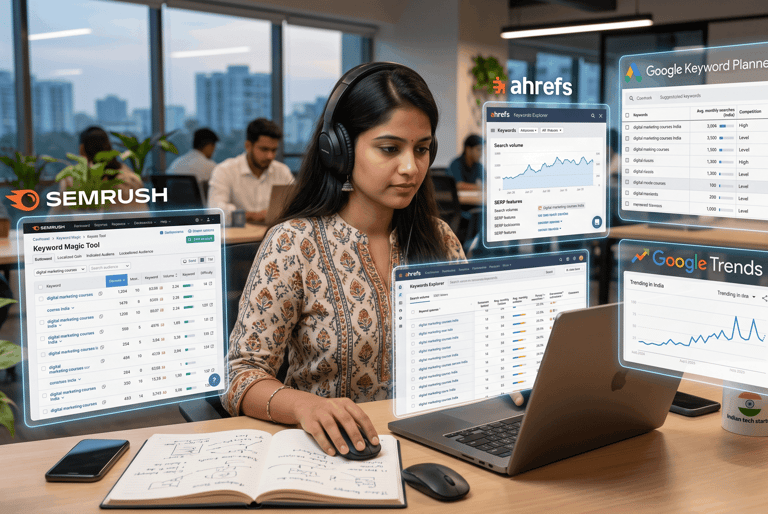

Keyword Research Tools Every Indian Marketer Needs
If there's one lesson I've learned during my 12+ years in digital marketing, it's this: great marketing starts with understanding what people are searching for.
Whether you're running a hotel in Udupi, a homestay in Gokarna, an e-commerce store in Bengaluru, or a local service business in Mangaluru, keyword research is where the journey begins. Before creating content, launching ads, or redesigning a website, you need to know what your audience is typing into Google.
I often compare keyword research to fishing along the Karnataka coast. You can have the best boat and equipment, but if you don't know where the fish are, you'll spend hours without results. The same applies to digital marketing. Without proper keyword research, even the most beautiful website may struggle to attract visitors.
Over the years, I've tested dozens of SEO and keyword research platforms. Some are expensive, some are free, and some are surprisingly powerful for Indian businesses. In this guide, I'll share the keyword research tools every Indian marketer needs, how I use them, and what makes each one valuable.
Whether you're a beginner, business owner, blogger, hotel marketer, or SEO professional, you'll find practical insights you can apply immediately.
Why Keyword Research Matters More Than Ever
The digital landscape in India is evolving rapidly. Millions of users are searching every day in English, Hindi, Kannada, Tamil, Telugu, Malayalam, and other regional languages.
Keyword research helps you:
Understand customer intent
Discover content opportunities
Improve organic rankings
Reduce advertising costs
Generate qualified leads
Identify market trends
Build long-term SEO growth
The biggest mistake I see businesses make is creating content based on assumptions rather than search data.
Instead of guessing what customers want, keyword research lets you see actual search behavior.
Good marketing starts with listening. Keyword research is one of the best ways to listen at scale.
[Image Suggestion: Digital marketer analyzing keyword data on a laptop with Google search graphs]
Google Keyword Planner: The Foundation Every Marketer Needs
Why I Still Use It After So Many Years
Many marketers chase premium tools and overlook one of the most useful free resources available: Google Keyword Planner.
Because the data comes directly from Google Ads, it provides valuable insights into:
Search volume
Competition levels
Related keywords
Seasonal trends
Cost-per-click estimates
For Indian businesses, this tool is especially useful when planning local campaigns.
For example:
Hotels in Murudeshwar
Resorts near Gokarna
Restaurants in Udupi
Travel services in Coastal Karnataka
Google Keyword Planner helps uncover search demand before investing in content or advertising.
Best For
Beginners
Small businesses
Local marketers
PPC campaigns
Limitation
The search volume ranges can sometimes be broad unless you're actively running Google Ads campaigns.
SEMrush: My Go-To Tool for Competitive Research
When clients ask me how competitors consistently rank on Google, SEMrush is often where I begin.
What Makes SEMrush Powerful
SEMrush helps marketers discover:
Competitor keywords
Ranking positions
Content gaps
Backlink opportunities
Traffic estimates
Trending topics
One feature I particularly appreciate is Keyword Gap Analysis.
Imagine you're running a resort website in Karnataka. SEMrush can reveal keywords your competitors rank for that you're completely missing.
That's often where some of the easiest growth opportunities exist.
Key Benefits
Detailed keyword difficulty scores
Competitor traffic insights
Position tracking
Local SEO support
Content optimization suggestions
Best For
SEO agencies
Advanced marketers
Competitive industries
Hotel and tourism marketing
[Image Suggestion: SEO dashboard showing competitor keyword analysis and ranking data]
Ahrefs: Excellent for Content and Link Building
If SEO were a house, backlinks would still be one of its strongest pillars.
That's where Ahrefs shines.
Why Marketers Love Ahrefs
Ahrefs offers:
Extensive backlink analysis
Keyword research
Content gap reports
SERP analysis
Competitor tracking
One of my favourite features is the ability to study the pages already ranking on Google's first page.
Instead of creating content blindly, you can see:
Content length
Backlink profiles
Ranking keywords
Search intent
This helps create content that truly competes.
Best For
Content marketers
SEO professionals
Link-building campaigns
Competitive niches
Practical Tip
Don't chase every keyword.
Focus on keywords where your website has a realistic chance of ranking.
A smaller website targeting highly competitive keywords often wastes valuable time and resources.
Ubersuggest: Budget-Friendly and Beginner-Friendly
Not every business can justify premium SEO software.
That's where Ubersuggest becomes useful.
Created by digital marketer Neil Patel, Ubersuggest offers a good balance of affordability and functionality.
Features Include
Keyword suggestions
Search volume estimates
SEO difficulty
Content ideas
Site audits
Why Indian Marketers Like It
Affordable pricing
Simple interface
Easy reporting
Beginner-friendly dashboard
I've recommended it to several small business owners who wanted better SEO insights without a significant software investment.
It's not as deep as SEMrush or Ahrefs, but it's an excellent starting point.
Google Trends: The Most Underrated Keyword Research Tool
If I had to pick one free tool that more marketers should use, it would be Google Trends.
Why It Matters
Google Trends shows:
Rising search topics
Seasonal demand
Regional popularity
Trending searches
Consumer interest changes
This is especially valuable in India because search behavior varies significantly across states and regions.
For example:
Tourism searches increase before holiday seasons.
Educational searches spike during admission periods.
Travel-related searches grow around festivals and long weekends.
Coastal Karnataka Example
Living and working around Coastal Karnataka has taught me how seasonal trends impact businesses.
Searches related to:
Beach destinations
Monsoon travel
Temple tourism
Family vacations
often fluctuate throughout the year.
Google Trends helps identify those opportunities before competitors notice them.
[Image Suggestion: Google Trends graph showing seasonal search demand patterns]
AnswerThePublic: Discover Questions Real People Ask
One challenge many marketers face is generating content ideas.
AnswerThePublic solves this beautifully.
What It Does
The platform organizes search queries into:
Questions
Comparisons
Prepositions
Related searches
Instead of targeting only keywords, you discover actual questions people ask.
Examples:
Which SEO tool is best?
How does keyword research work?
Why is SEO important for businesses?
When should I update website content?
Why This Matters
Modern SEO isn't just about keywords.
It's about answering questions.
When your content solves genuine problems, search engines reward that value.
Keyword Research Tips I Wish I Knew Earlier
After years of SEO work across hospitality, travel, and local business sectors, here are a few lessons that consistently produce results.
1. Search Intent Matters More Than Search Volume
A keyword with 500 searches and strong buying intent can outperform a keyword with 10,000 searches and weak intent.
Always ask:
What is the user trying to accomplish?
2. Long-Tail Keywords Are Gold
Examples:
Best family resort near Murudeshwar
Affordable hotel in Udupi for couples
Digital marketing consultant in Karnataka
These keywords may have lower volume but often convert better.
3. Study Google's First Page
Before creating content:
Analyze top-ranking pages
Understand search intent
Identify missing information
Create something genuinely better
4. Don't Ignore Regional Searches
India's internet audience is incredibly diverse.
Look for:
Kannada keywords
Hindi keywords
Location-based phrases
Regional search variations
5. Think Like a Customer
This sounds simple, but it's often overlooked.
Whenever I help businesses improve SEO, I ask:
"If I were the customer, what would I search?"
That question alone can uncover dozens of valuable keyword opportunities.
Choosing the Right Keyword Research Tool
Here's a simple comparison:
ToolBest ForCost LevelGoogle Keyword PlannerBeginners & PPCFreeGoogle TrendsTrend AnalysisFreeUbersuggestSmall BusinessesLowSEMrushAdvanced SEOHighAhrefsBacklinks & SEOHighAnswerThePublicContent IdeasMedium
My recommendation?
Start with:
Google Keyword Planner
Google Trends
Then gradually invest in premium tools as your marketing grows.
You don't need expensive software to begin.
You need consistency, curiosity, and a willingness to learn.
Beyond SEO: Understanding People
One thing I appreciate about digital marketing is that it constantly reminds us that behind every search query is a real person.
Someone is searching because they have a question, a problem, a goal, or a dream.
The best marketers never lose sight of that.
Growing up in Coastal Karnataka taught me the value of observing people closely. Whether it's conversations at local tea shops, discussions among family members, or business owners adapting to changing times, success often comes from understanding people better than anyone else.
Keyword research is simply a digital version of that timeless skill.
The tools may change.
Algorithms may change.
Technology will continue evolving.
But understanding human needs will always remain at the heart of successful marketing.
[Image Suggestion: Coastal Karnataka entrepreneur working on a laptop overlooking greenery and nature]
Conclusion
Keyword research tools are no longer optional for marketers—they're essential.
Whether you're managing a hotel website, building an e-commerce business, running a blog, or helping clients improve their online visibility, the right keyword research tools can save time, reduce guesswork, and unlock meaningful growth.
If you're just starting out, begin with Google Keyword Planner and Google Trends. As your experience grows, explore tools like SEMrush, Ahrefs, Ubersuggest, and AnswerThePublic.
Most importantly, remember that keyword research isn't really about keywords.
It's about understanding people.
And when you understand people, better marketing naturally follows.
From the peaceful coastal landscapes of Karnataka to the fast-moving world of digital marketing, I've found that listening carefully always creates better results.
The same principle applies online.
Listen to what people are searching for, and you'll rarely run out of opportunities.
FAQs
1. What is the best keyword research tool for beginners?
Google Keyword Planner is one of the best free tools for beginners because it provides search volume data directly from Google.
2. Is SEMrush better than Ahrefs?
Both are excellent tools. SEMrush is often preferred for competitive research and overall SEO management, while Ahrefs is widely known for backlink analysis.
3. Can I do keyword research for free?
Yes. Google Keyword Planner, Google Trends, and limited versions of several SEO tools offer valuable free keyword research capabilities.
4. Why are long-tail keywords important?
Long-tail keywords usually have lower competition and higher conversion potential because they match specific user intent.
5. How often should keyword research be done?
Keyword research should be reviewed regularly. Many marketers update keyword strategies every quarter or when launching new campaigns.
6. Is keyword research useful for local businesses?
Absolutely. Local SEO relies heavily on location-specific keywords that help customers discover nearby businesses.
7. Can keyword research improve Google Ads performance?
Yes. Better keyword targeting often improves ad relevance, click-through rates, and return on investment.
8. What is search intent in SEO?
Search intent refers to the reason behind a user's search query, such as learning information, comparing options, or making a purchase.
.
Click Here to know about AI in SEO: Smart Tools and Ethical Use
Anudeep Hegde
Seasoned Internet Marketing Specialist and Hotel Marketing Expert with over 12+ years of experience helping brands grow and succeed online.
Get in touch
connect@anudeephegde.com
+91 9449507266, +91 9731258717
© 2025. All rights reserved. @Trip Nirvigna Marketing