Why Every Business Needs a Digital Transformation Strategy
Discover why every business needs a digital transformation strategy to improve efficiency, customer experience, and long-term growth with practical insights.
Anudeep hegde
7/3/20264 min read
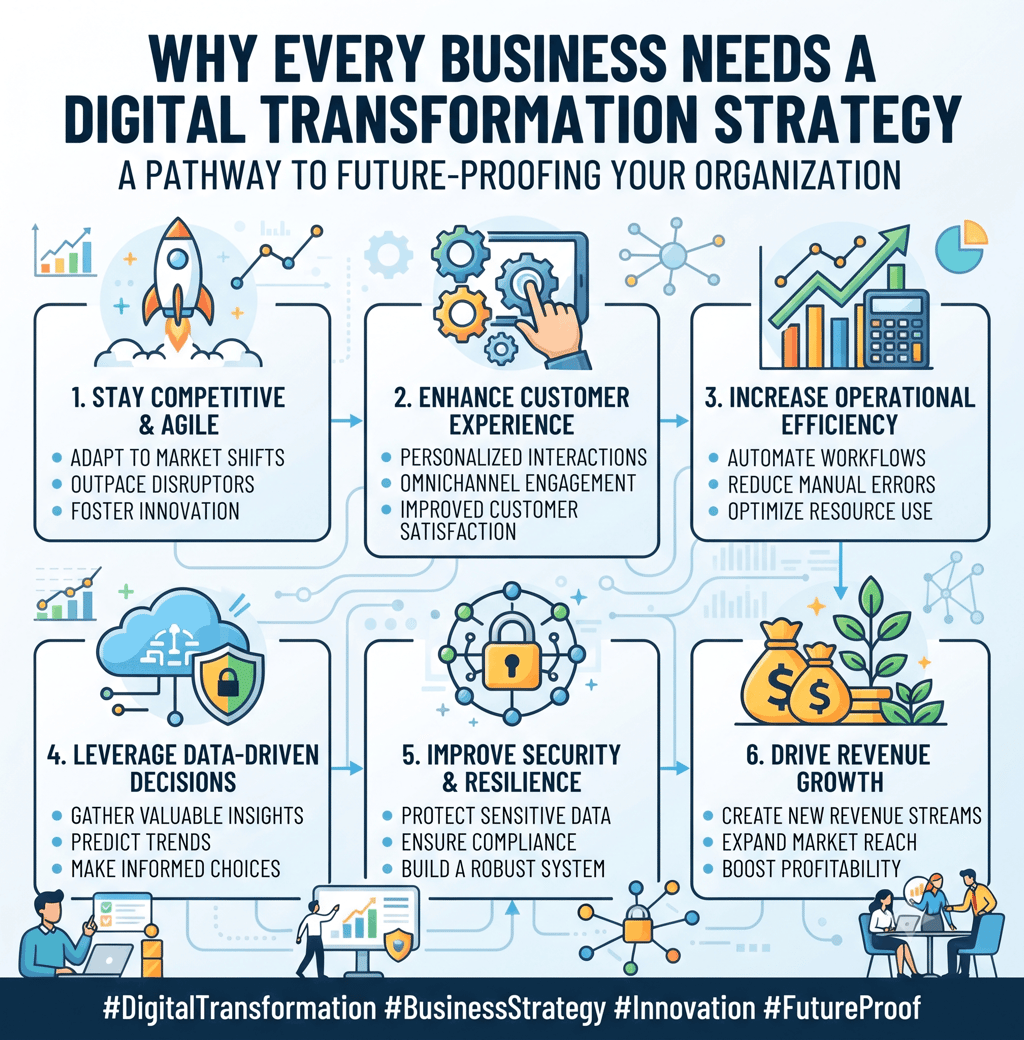
Why Every Business Needs a Digital Transformation Strategy
There was a time when having a good product and a loyal customer base was enough to keep a business running successfully. I remember visiting small family-run shops and hotels across Coastal Karnataka during my younger days. Many of them didn't have websites, online payments, or social media pages, yet customers kept coming back because of trust, quality, and relationships.
Those values still matter today.
But the way customers discover, compare, and choose businesses has changed dramatically.
As someone who has spent more than 12 years working in digital marketing and hotel marketing, I've witnessed this transformation firsthand. Businesses that embraced technology early found new opportunities, while many that delayed adapting struggled to keep pace with changing customer expectations.
Digital transformation isn't about replacing people with machines or following every new technology trend. It's about using digital tools thoughtfully to make your business more efficient, improve customer experiences, and prepare for long-term growth.
Growing up in Byndoor, surrounded by nature, hardworking families, and close-knit communities, I learned that progress doesn't mean forgetting your roots. The strongest trees continue to grow because their roots remain deep. I believe businesses should follow the same philosophy. Technology should strengthen your values, not replace them.
According to the Organisation for Economic Co-operation and Development (OECD), digital transformation can significantly improve productivity, innovation, competitiveness, and resilience for small and medium-sized businesses. However, many SMEs continue to face barriers such as limited digital skills, investment challenges, and uncertainty about where to begin.
In this article, I'll share practical lessons from my experience helping businesses across India build a digital-first mindset without losing the human touch that makes them unique.
[Image Suggestion: Small business owner using a laptop while serving customers in a modern retail store.]
What Does Digital Transformation Really Mean?
Many people assume digital transformation simply means creating a website or opening social media accounts.
It's much bigger than that.
Digital transformation is about changing how a business operates by using technology to improve every part of its operations—from customer service and marketing to finance and decision-making.
Think of it as upgrading your business engine instead of just repainting the car.
Digital Transformation Includes
Building a professional website
Online appointment or booking systems
Digital payment options
Customer Relationship Management (CRM) software
Cloud-based collaboration
Marketing automation
Search Engine Optimization (SEO)
Data analytics
Artificial Intelligence tools
Online customer support
The goal isn't to use every available technology.
The goal is to choose the right technology that solves real business problems.
A Simple Example
Imagine a hotel owner in Udupi who still depends only on phone calls for bookings.
Now compare that with another hotel owner who has:
Online reservations
WhatsApp support
Google Business Profile
Automated confirmation emails
Online reviews
Google Maps visibility
Both may offer excellent hospitality, but one business is much easier for modern customers to discover and book.
That's digital transformation in action.
Why Businesses Can No Longer Ignore Digital Transformation
Today's customers expect convenience.
Whether someone is searching for a restaurant, a doctor, an architect, or a hotel, the journey usually starts online.
If your business isn't visible where customers are searching, you're invisible to many potential buyers.
Customer Expectations Have Changed
Today's customers want to:
Search online before visiting
Compare reviews
Check business hours instantly
Book appointments digitally
Pay online securely
Receive quick responses
Businesses that fail to meet these expectations often lose customers—not because their products are poor, but because competitors offer a smoother experience.
The Digital Economy Is Growing
India continues to witness rapid digital adoption driven by affordable smartphones, expanding internet access, and digital payment systems.
According to recent studies on Indian MSMEs, businesses that adopt digital tools often report improvements in operational efficiency, customer reach, and business growth. Digital payments, online marketplaces, and cloud-based software have become essential rather than optional for many small businesses.
This shift isn't limited to metropolitan cities.
I've seen entrepreneurs in Kundapura, Byndoor, Bhatkal, and other towns increasingly using WhatsApp Business, Google Maps, and Instagram to reach customers.
Technology has made geography less important than visibility.
[Image Suggestion: Entrepreneur checking online orders and customer messages on a smartphone.]
The Biggest Benefits of Digital Transformation
When people ask me why they should invest in digital transformation, I usually tell them it's not an expense.
It's an investment in efficiency.
Here are some of the biggest advantages.
1. Better Customer Experience
Customers appreciate businesses that save them time.
Simple improvements such as online booking, digital invoices, and instant communication create lasting impressions.
Happy customers become repeat customers.
2. Improved Business Efficiency
Automation reduces repetitive work.
Instead of manually updating spreadsheets or sending individual reminders, businesses can automate many daily tasks.
Examples include:
Appointment reminders
Email follow-ups
Invoice generation
Customer feedback collection
Inventory updates
This allows teams to focus on meaningful work rather than routine administration.
3. Better Decision-Making Through Data
One of the greatest advantages of digital transformation is access to data.
Rather than making decisions based on assumptions, business owners can understand:
Which marketing campaigns perform best
Where customers come from
Which products generate the highest revenue
Customer buying behaviour
Seasonal trends
As a digital marketer, I've often seen small changes based on analytics produce better results than expensive advertising campaigns.
Data removes guesswork.
4. Increased Business Resilience
The past few years reminded businesses worldwide that unexpected challenges can appear at any time.
Businesses with online communication channels, digital payments, remote collaboration tools, and cloud-based systems were often better positioned to continue serving customers during periods of disruption.
Digital transformation helps businesses become more adaptable in uncertain times.
Digital Transformation Starts with Mindset, Not Technology
Many business owners think they need expensive software before they can begin.
I disagree.
The first transformation should happen in our thinking.
Technology is only a tool.
The real change comes from asking better questions.
Instead of asking:
"Should I create a website?"
Ask:
"How can I make it easier for customers to reach me?"
Instead of asking:
"Should I invest in automation?"
Ask:
"Which repetitive tasks are taking up my team's valuable time?"
This shift in perspective changes everything.
Lessons from Coastal Karnataka
One thing I admire about people from Coastal Karnataka is their willingness to adapt without forgetting tradition.
Farmers use weather forecasting apps while respecting generations of farming knowledge.
Fishermen check digital weather updates before heading into the Arabian Sea but still rely on years of practical experience.
Families use online banking while continuing traditions of saving wisely and living within their means.
Businesses can do the same.
Digital transformation should complement experience—not replace it.
Sometimes the most successful businesses are those that combine traditional values with modern technology.
.
Click here to know about Work-Life Balance Through Better Discipline
Anudeep Hegde
Seasoned Internet Marketing Specialist and Hotel Marketing Expert with over 14+ years of experience helping brands grow and succeed online.
Get in touch
connect@anudeephegde.com
Bangalore & Kundapura, India
© 2026. All rights reserved. @Trip Nirvigna Marketing
+91 9449507266, +91 9731258717