Work-Life Balance Through Better Discipline
Discover how work-life balance through better discipline can improve your health, productivity, and relationships with practical habits and real-life insights.
Anudeep Hegde
6/26/20267 min read
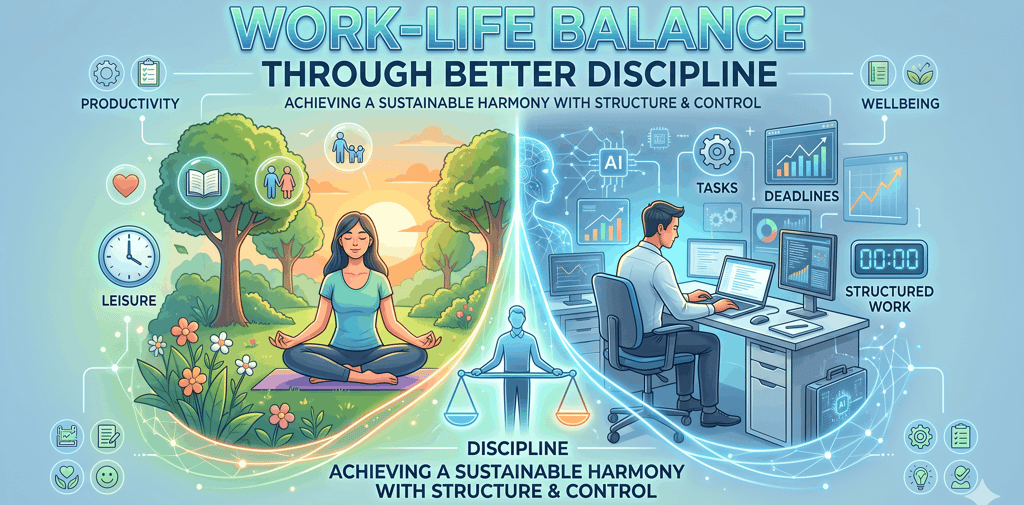
Work-Life Balance Through Better Discipline
There was a time when I believed working longer hours meant I was working harder.
Like many professionals in digital marketing, I often found myself checking emails late at night, replying to client messages during family dinners, and thinking about work even while taking a walk along the beautiful beaches of Coastal Karnataka.
It took me years to realise something simple but life-changing.
Work-life balance isn't created by having more free time. It's created through better discipline.
As an Internet Marketing Specialist and Hotel Marketing Consultant, I work with businesses that never truly sleep. Hotels receive bookings around the clock, digital campaigns run 24/7, and search engines certainly don't take weekends off.
Yet over time, I learned that discipline—not busyness—is what keeps both my work and personal life healthy.
Growing up in Byndoor, surrounded by lush greenery, peaceful temples, the Arabian Sea, and close-knit family values, I saw people who worked incredibly hard. Farmers, fishermen, small business owners, teachers—they all understood something many modern professionals forget.
They respected both work and rest.
Today, I want to share the lessons that have helped me create a healthier balance between professional ambition and personal happiness.
If you're constantly feeling busy, stressed, or guilty about not spending enough time with your family or yourself, I hope this article helps you rethink what true productivity really means.
Why Work-Life Balance Through Better Discipline Matters
Many people think work-life balance means dividing every day perfectly between work and personal life.
Real life doesn't work that way.
Some days require extra effort.
Other days deserve complete rest.
The real goal is sustainability.
According to the World Health Organization (WHO) and the International Labour Organization (ILO), working 55 hours or more per week is associated with a higher risk of stroke and ischaemic heart disease compared with standard working hours. Their joint analysis, published in 2021, highlighted the serious health risks of consistently long working hours.
That statistic isn't meant to scare us.
It's a reminder that our health quietly reflects our daily habits.
When we ignore rest, sleep, exercise, and relationships, our work eventually suffers too.
True work-life balance helps improve:
Physical health
Mental well-being
Decision-making
Creativity
Family relationships
Long-term career success
Discipline Creates Freedom
This might sound surprising.
Most people think discipline limits freedom.
I've found the opposite to be true.
When I'm disciplined about my schedule, I enjoy my free time without guilt.
When I finish important tasks on time, I don't carry unfinished work into dinner conversations or family outings.
Discipline creates boundaries.
And boundaries protect what matters most.
Small Habits That Changed My Routine
Over the years, I introduced simple rules into my daily life:
Start work with a clear priority list.
Avoid checking emails immediately after waking up.
Finish important tasks during my peak energy hours.
Keep evenings mostly free for family whenever possible.
Stop unnecessary multitasking.
None of these habits are revolutionary.
But together, they've made an enormous difference.
Image Suggestion: Early morning workspace with a notebook, laptop, and a cup of South Indian filter coffee beside a window overlooking greenery.
Productivity Isn't About Working More Hours
One misconception I often hear is:
"Successful people work all the time."
In reality, successful people often protect their time better than anyone else.
I've learned that a focused four-hour work session can produce better results than eight distracted hours.
According to the American Psychological Association (APA), multitasking generally reduces efficiency because the brain spends time switching between tasks rather than focusing deeply on one activity.
That's why I now prefer working in focused blocks.
Try the "Priority Three" Method
Every morning, write down only three major tasks.
Ask yourself:
What absolutely needs to be completed today?
What creates the most value?
What can wait?
Completing three meaningful tasks feels far more satisfying than crossing twenty minor items off a list.
Family Time Deserves the Same Commitment as Client Meetings
One lesson I've learned over the years is this:
We schedule meetings with clients.
We should schedule time with family too.
Growing up in Coastal Karnataka, family meals, festivals, temple visits, and evening conversations were never considered interruptions.
They were simply part of life.
Today, technology makes it easy to remain connected to work every minute.
But constant availability isn't the same as dedication.
When I'm spending time with family, I try to be fully present.
No constant notifications.
No unnecessary scrolling.
Just conversations.
Those moments recharge me in ways that no productivity app ever could.
Simple Ways to Protect Family Time
Keep phones away during meals.
Plan one outing every week.
Take evening walks together.
Celebrate small milestones.
Listen more than you speak.
Strong relationships don't require expensive vacations.
They grow through ordinary moments shared consistently.
Image Suggestion: Family enjoying an evening walk along the beaches of Coastal Karnataka during sunset.
Your Health Is Part of Your Professional Success
For many years, I viewed exercise as something I'd do "when I had time."
Now I see it differently.
Exercise gives me the energy to perform better at work.
Living in Coastal Karnataka has its own rhythm.
The warm weather and humidity remind us how important hydration, good nutrition, and proper rest really are.
Whenever possible, I enjoy early morning walks before the heat builds up.
Nature has a calming effect that's difficult to replicate indoors.
According to the World Health Organization, adults should aim for 150–300 minutes of moderate-intensity physical activity each week, along with muscle-strengthening activities on at least two days per week.
The recommendation isn't just about fitness.
Regular movement supports:
Better concentration
Improved mood
Better sleep
Reduced stress
Increased energy
Healthy professionals make better decisions.
It's really that simple.
Learn to Say "No" Without Feeling Guilty
This was probably the hardest lesson for me.
Early in my career, I said yes to almost everything.
Extra meetings.
Last-minute requests.
Weekend work.
Urgent calls.
Eventually, I realised something important.
Every "yes" is also a "no" to something else.
Sometimes that "something else" is your health.
Sometimes it's your family.
Sometimes it's your peace of mind.
A Better Way to Respond
Instead of immediately agreeing, try saying:
"Let me check my schedule."
"Can we plan this for tomorrow?"
"I'd like to give this proper attention."
Clients usually respect thoughtful planning more than rushed commitments.
Sustainable Success Requires Sustainable Habits
One thing nature teaches us here in Karnataka is balance.
The monsoon doesn't rush.
The tides follow their rhythm.
Trees grow steadily.
Everything worthwhile takes time.
Our careers are no different.
I've stopped chasing the idea of overnight success.
Instead, I focus on becoming slightly better every week.
Daily Habits That Build Long-Term Balance
HabitLong-Term BenefitWake up consistentlyBetter energyPlan your dayReduced stressExercise regularlyImproved focusEat nutritious mealsStable productivityLimit unnecessary screen timeBetter mental healthSpend quality family timeEmotional well-beingReflect before sleepingContinuous improvement
Small habits seem ordinary.
Until you repeat them for years.
Then they become your lifestyle.
Image Suggestion: Sunrise over paddy fields in Coastal Karnataka symbolising balance, discipline, and steady growth.
Discipline Helps Reduce Stress, Not Increase It
Some people imagine disciplined lives to be rigid and joyless.
I don't see discipline that way.
For me, discipline creates flexibility.
Because my work is organised, I can enjoy spontaneous family trips, attend local festivals, or simply sit outside during a peaceful coastal evening without worrying about unfinished work.
Discipline reduces mental clutter.
You spend less time wondering what to do next.
You simply follow the systems you've already created.
That creates peace.
And peace is incredibly productive.
Practical Ways to Build Better Work-Life Balance Starting Today
If you're feeling overwhelmed, don't try changing everything overnight.
Start with these simple habits:
Plan tomorrow before ending today's work.
Keep mornings free from unnecessary social media.
Complete your three most important tasks first.
Schedule family time like an important meeting.
Walk for at least 30 minutes most days.
Stay hydrated, especially during Coastal Karnataka's humid weather.
Turn off work notifications during personal time.
Sleep consistently whenever possible.
Review your week every Sunday.
Celebrate progress instead of chasing perfection.
Remember:
Discipline isn't about being strict with yourself. It's about being kind to your future self.
Work-Life Balance Is Different for Everyone
One thing I've realised is that there isn't a universal formula.
Some people enjoy working early mornings.
Others do their best work at night.
Some prioritise travel.
Others value quiet evenings at home.
That's perfectly fine.
The goal isn't copying someone else's routine.
The goal is building a life where your work supports your happiness instead of replacing it.
For me, that balance includes meaningful work, continuous learning, quality family time, good health, and occasionally watching the sunset over the Arabian Sea.
Those simple moments remind me why discipline matters in the first place.
Conclusion
Work-life balance through better discipline isn't about achieving a perfect schedule.
It's about making intentional choices every day.
When we plan our time, protect our health, respect our relationships, and stay consistent with small habits, life becomes less stressful and more meaningful.
Looking back on my own journey, I've learned that success feels much more rewarding when there's enough time to enjoy it with the people who matter most.
Growing up in Coastal Karnataka taught me that life's greatest riches often aren't found in bigger achievements, but in simple routines shared with family, good health, meaningful work, and time spent in nature.
If you're feeling overwhelmed today, don't aim for perfection.
Start with one better habit.
Then another.
Those small acts of discipline will gradually create the balanced life you're looking for.
FAQs
1. What is work-life balance through better discipline?
It means using consistent habits, clear priorities, and healthy boundaries to manage work and personal life more effectively.
2. Can discipline actually reduce stress?
Yes. Good routines reduce decision fatigue, improve organisation, and help prevent last-minute pressure.
3. How many work hours are considered unhealthy?
According to the WHO and ILO, consistently working 55 hours or more per week is associated with increased health risks.
4. What's the best first step toward better work-life balance?
Start by planning your day with three key priorities and setting a clear end time for work whenever possible.
5. How does physical health affect productivity?
Regular exercise, quality sleep, hydration, and proper nutrition improve concentration, mood, and decision-making.
6. Is saying "no" important for work-life balance?
Absolutely. Respectfully declining unnecessary commitments protects your time, energy, and relationships.
7. How can professionals avoid burnout?
Maintain healthy routines, take regular breaks, prioritise sleep, exercise consistently, and create boundaries between work and personal life.
8. Does work-life balance look the same for everyone?
No. Every individual has different priorities, responsibilities, and working styles. The best balance is the one that supports your health, relationships, and long-term goals.
.
Click here to know about Content Clusters for Topical Authority
Anudeep Hegde
Seasoned Internet Marketing Specialist and Hotel Marketing Expert with over 12+ years of experience helping brands grow and succeed online.
Get in touch
connect@anudeephegde.com
+91 9449507266, +91 9731258717
© 2026. All rights reserved. @Trip Nirvigna Marketing